Why oven temperature changes everything
Temperature determines three fundamental parameters of pizza: baking time, base texture, and crust behaviour. Variations of 30–40 °C on the deck can turn a well-made pizza into a rubbery base or one that is burnt on the outside and raw inside.
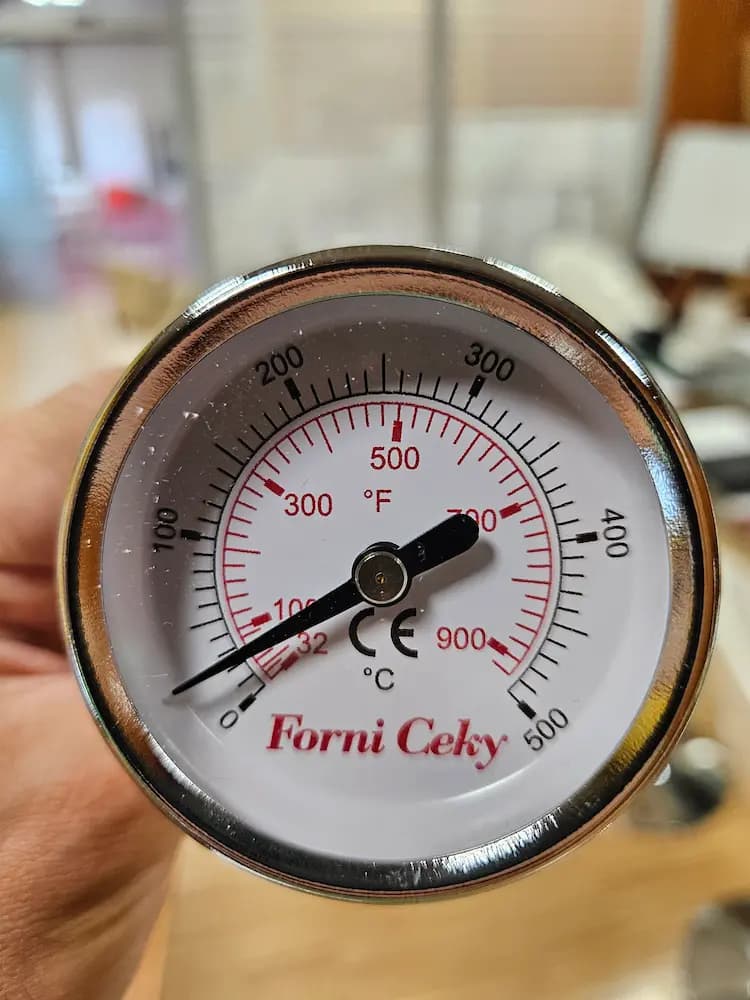
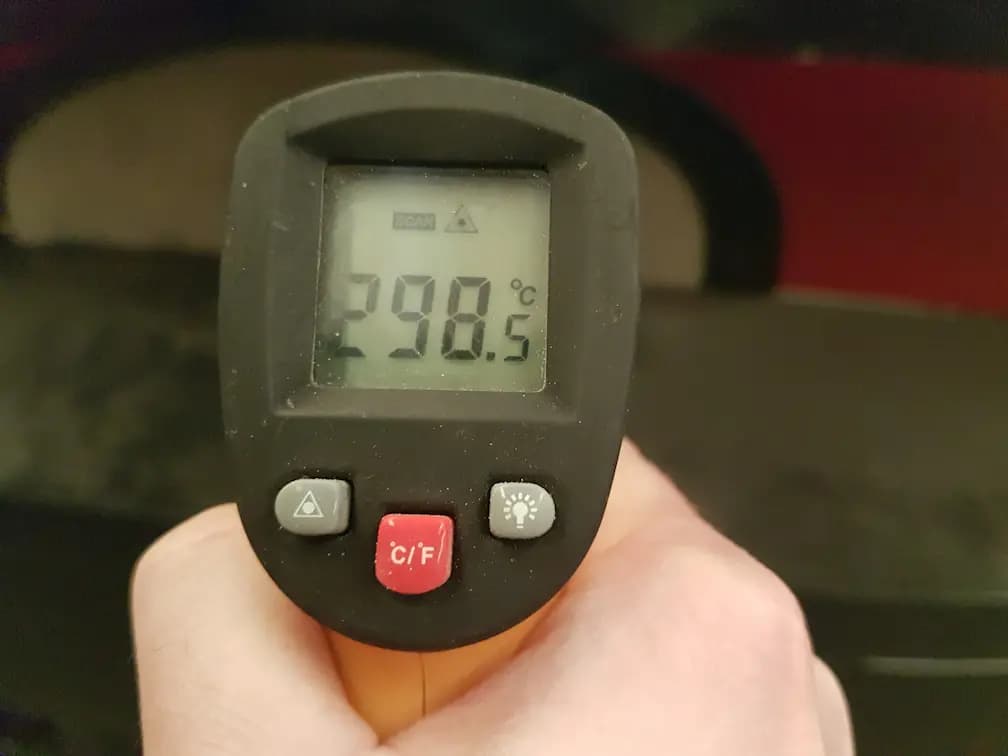
The most critical distinction is between chamber temperature (air and vault) and deck temperature. The built-in thermometer on most ovens measures the chamber. The deck, which heats by thermal inertia, follows a different curve — slower to cool down, but also slower to recover after a run of rapid bakes.
A 60 mm refractory brick deck stores enough thermal energy to hold temperature stably through 8–10 consecutive pizzas. A deck in less dense material exhausts its stored heat by the third or fourth pizza, forcing recovery pauses between bakes.
How wood, gas and electric ovens reach operating temperature
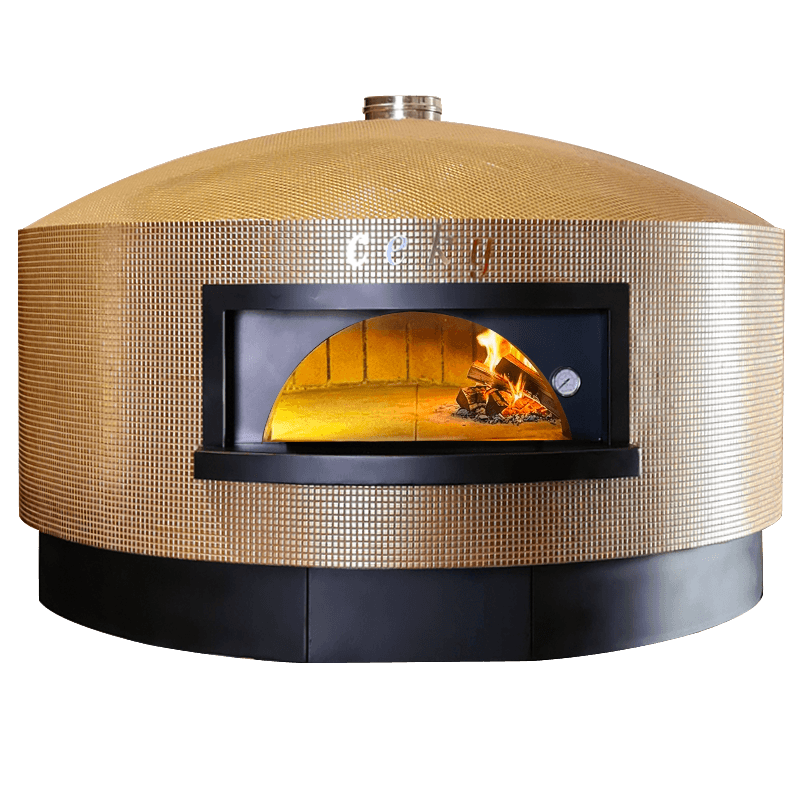
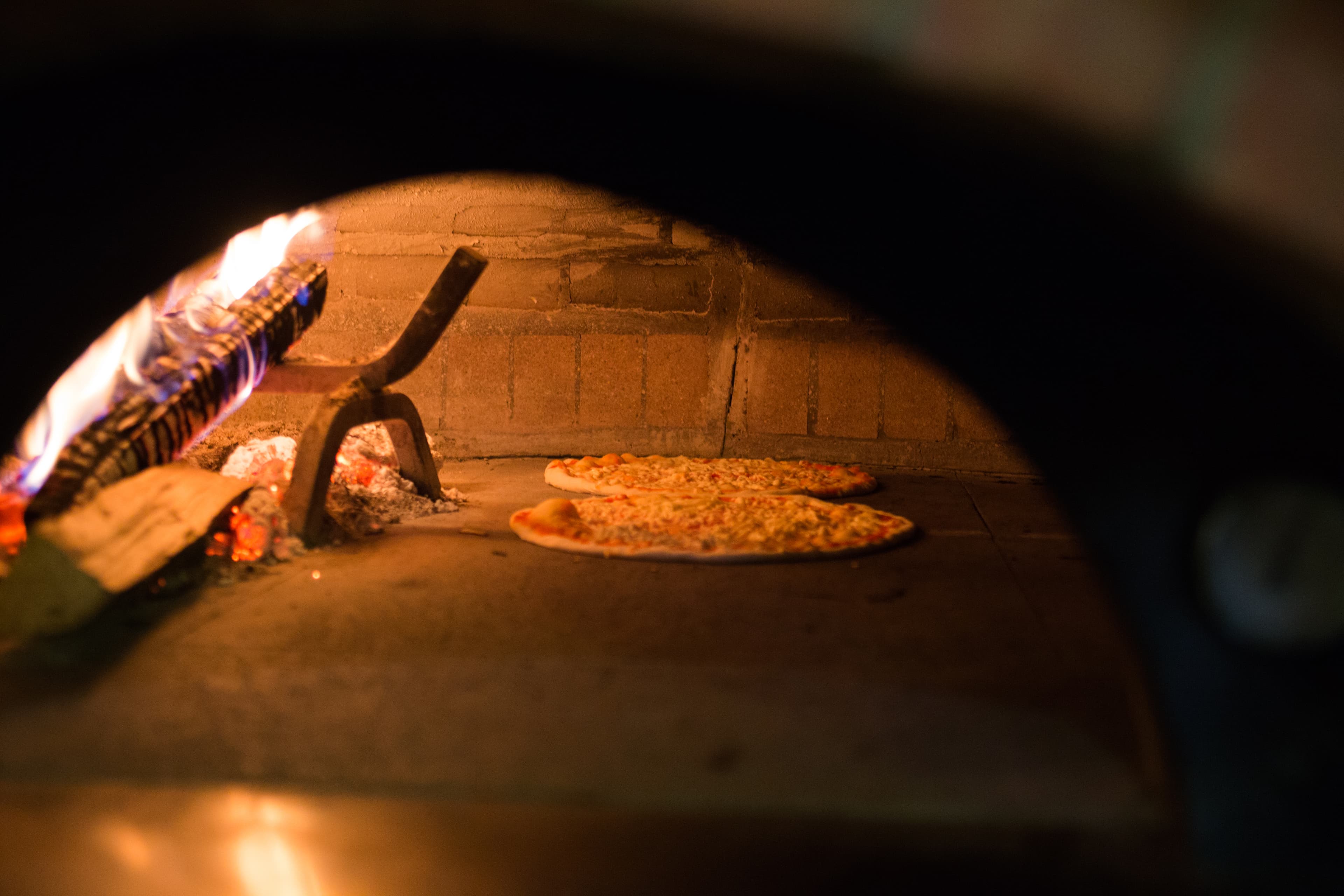
Wood-fired ovens reach 450–500 °C on the deck in 60–90 minutes from lighting. Direct combustion in the chamber heats the vault by radiation; the deck absorbs heat by conduction. Flame management requires experience: too low a flame drops vault temperature, too high causes uneven combustion.
Gas ovens work in the 400–480 °C range. The burner delivers consistent, adjustable heat, making temperature management more predictable during service. Ceky models with Wi-Fi connectivity allow remote temperature monitoring and programme management from a tablet.
Electric ovens operate between 400 and 450 °C. The main advantages are fast heat-up (20–35 minutes) and independent calibration of front, centre and back heating elements. They operate with an open mouth, requiring no flue or exhaust hood — making them particularly suited to urban venues with regulatory constraints.
Ideal temperatures for every pizza style
Neapolitan pizza requires the highest range: 430–480 °C on the deck, 450–500 °C in the chamber. Baking takes 60–90 seconds. At these temperatures the Maillard reaction is almost instantaneous, the crust puffs from internal steam and the base does not dry out because the intense heat is too brief to penetrate deeply.
Classic round pizza (non-Neapolitan) bakes at 350–420 °C in 2–4 minutes. Higher average hydration and a less pronounced rim require slightly lower heat that penetrates more deeply without burning the surface.
Pan and flatbread pizza works at 300–360 °C for 5–10 minutes. High hydration (often 75–85%) and greater dough thickness require a longer bake at lower temperature. The pan itself partially insulates the deck, reducing direct conduction and requiring a more active chamber.
The refractory deck: the thermal flywheel
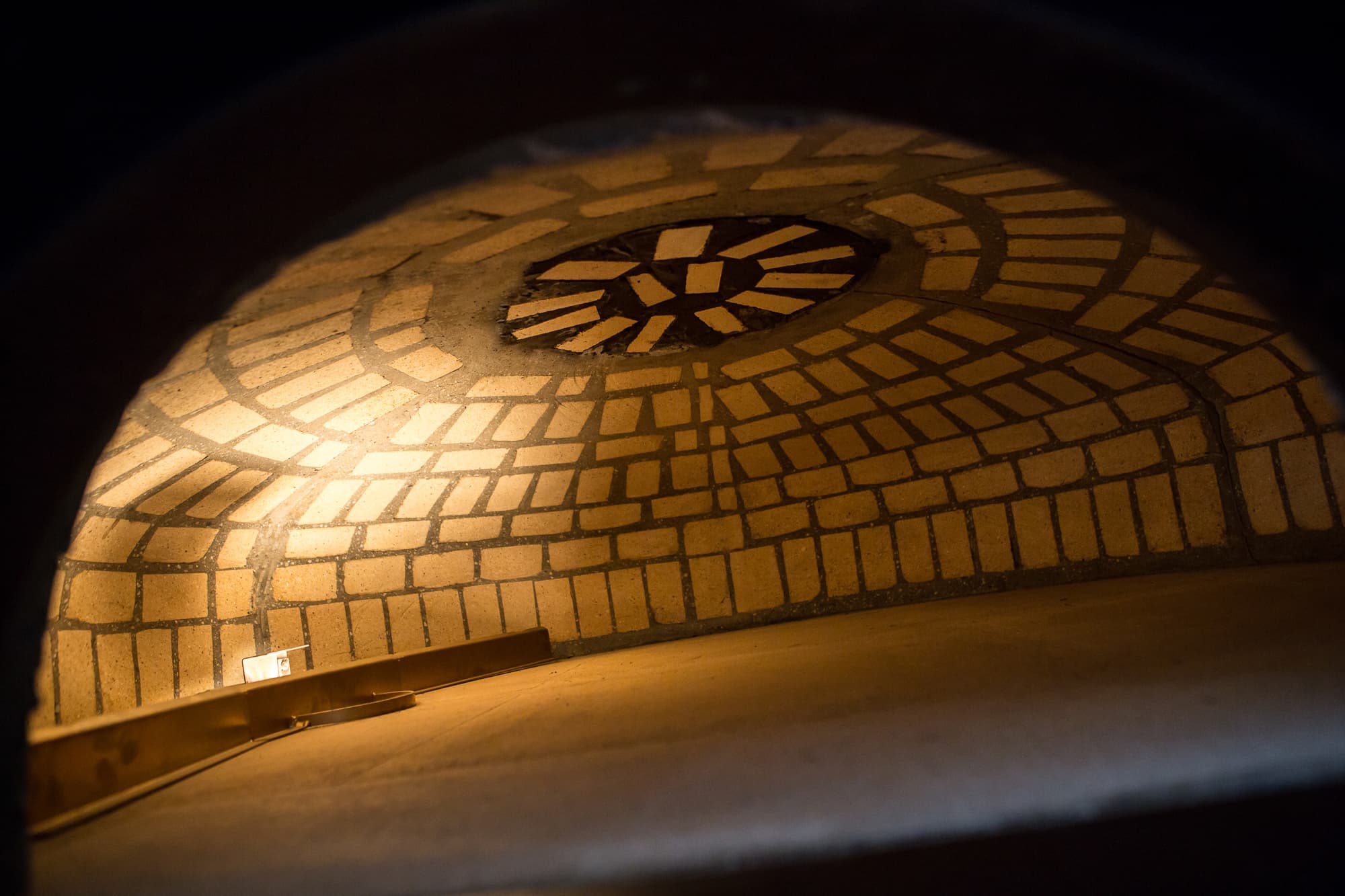
The 60 mm refractory brick deck is the component that stabilises temperature throughout service. Unlike cordierite or cast refractory concrete decks, high-density fireclay bricks have greater volumetric heat capacity: they store more energy per cubic centimetre and release it more slowly.
In practical terms: with a 60 mm Ceky deck, temperature does not drop below 350 °C even after 10 consecutive pizzas at full load. A thinner or less dense deck drops off by the fifth or sixth pizza, forcing recovery pauses that slow down service.
The average lifespan of a Ceky refractory brick deck exceeds 20 years, compared to the 7–10 years typical of cast concrete decks. Bricks can be replaced individually if damaged, without replacing the entire floor.
Temperature by pizza style
Deck
430–480 °C
Chamber
450–500 °C
Bake time
60–90 sec
Deck
350–420 °C
Chamber
380–440 °C
Bake time
2–4 min
Deck
300–360 °C
Chamber
320–380 °C
Bake time
5–10 min
In summary
The right temperature depends on the pizza style: 430–480 °C for Neapolitan, 350–420 °C for classic round, 300–360 °C for pan and flatbread. In all cases, it is the refractory deck — not just the chamber — that determines baking quality.
Wood, gas and electric ovens reach different temperatures with different heat-up curves, but all Ceky ovens share the same 60 mm refractory brick deck: the guarantee that the heat stored in the floor remains stable throughout service.