How heat is distributed
Heat in a wood-fired oven is distributed across two distinct planes: the deck (the refractory floor) and the dome (the vault). The two surfaces reach different temperatures and perform different functions in the baking process.
The deck, built from 60 mm refractory bricks, absorbs heat by conduction and releases it slowly to the dough. It bakes the pizza base, determines the crispness of the bottom crust, and maintains stable baking temperatures over time.
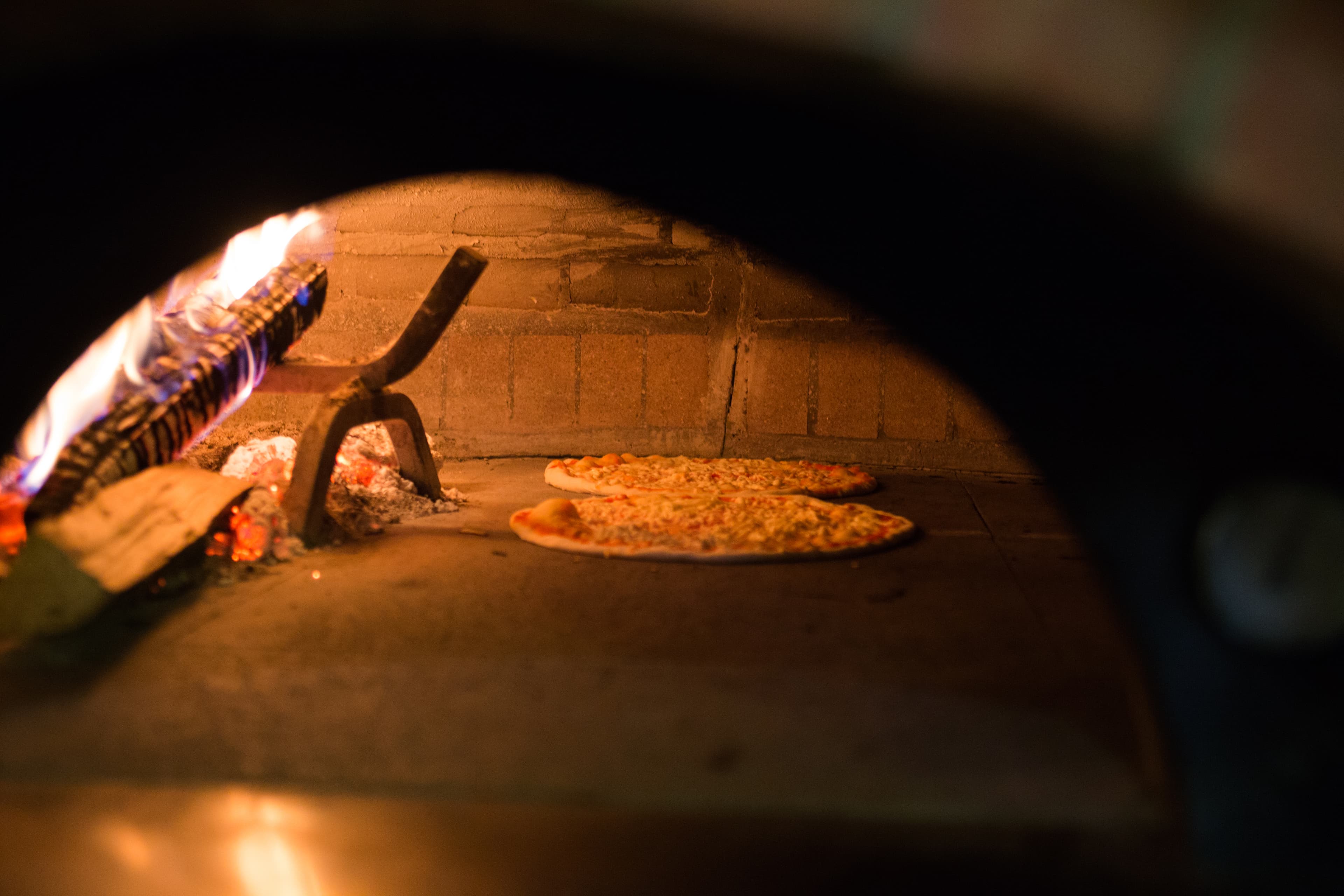
The dome radiates heat through convection and infrared radiation onto the pizza's surface, baking the topping and the upper crust. Correct fire management means keeping the fire to the side of the oven — not at the centre — to heat deck and dome evenly.
Ideal temperatures for each pizza style
For Neapolitan pizza, the technical reference is precise: deck at 380–420°C, dome at 420–450°C (measured at 11 cm from the deck), baking time 60–90 seconds. At these temperatures the Maillard reaction occurs rapidly and the cornicione puffs without drying out.
A classic round pizza tolerates a deck temperature of 330–380°C with a 2–3 minute bake. Pan pizza requires lower temperatures, 280–330°C, with longer bake times (4–7 minutes) to cook evenly through to the centre.
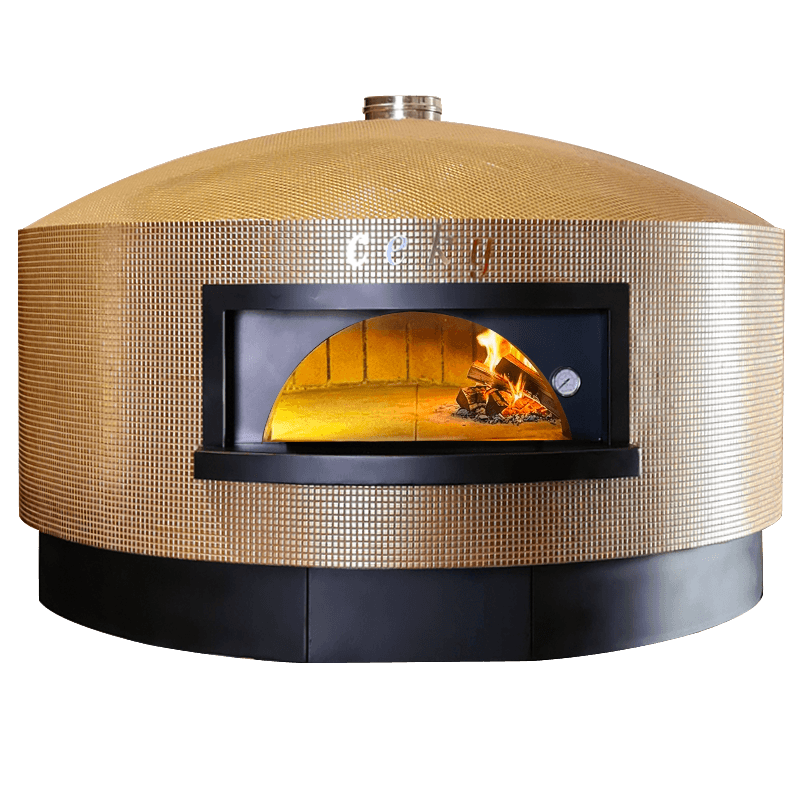
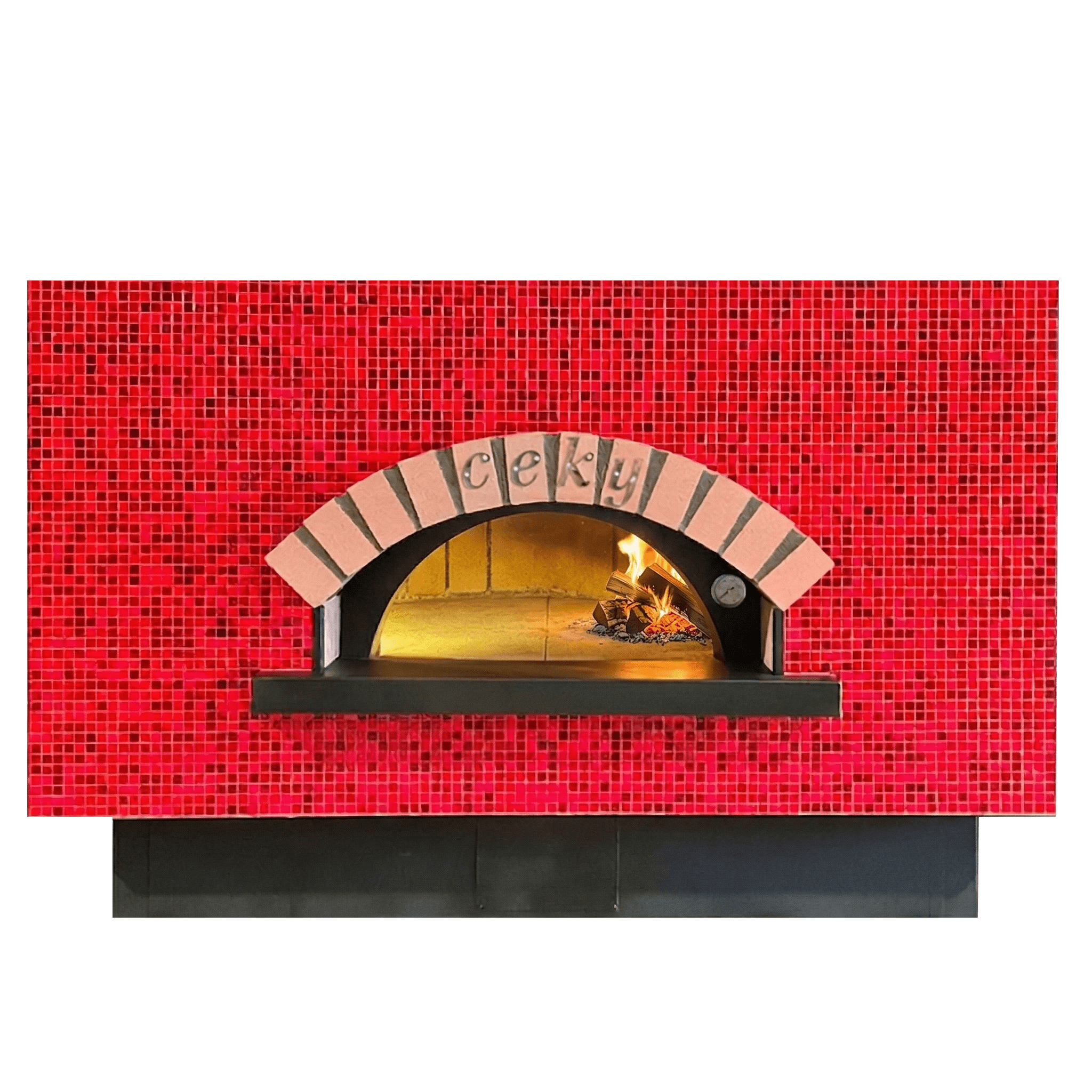
Ceky wood-fired ovens reach and sustain 400–440°C on the deck throughout service, thanks to the thermal density of refractory bricks. A cast-concrete oven, at the same power input, dissipates more heat and struggles to hold temperature during peak service.
How to reach and measure temperature
Standard warm-up for a professional wood-fired oven takes 60–90 minutes. The correct procedure is to start with small kindling, then add medium-gauge wood as the fire establishes itself, avoiding sudden flare-ups that can thermally stress the refractory.
To measure deck temperature, the most practical tool is an infrared (IR) thermometer: point it at the geometric centre of the deck, away from the fire, for a representative reading. Measurements near the fire or the door return unrepresentative values.
Dry wood with moisture content below 20% accelerates warm-up, produces less smoke, and burns more efficiently. Green or damp wood lowers achievable temperatures and creates excessive smoke.
Common mistakes in heat management
The most common mistake is starting to bake too early: the deck surface reads hot but the full depth of the refractory has not yet absorbed sufficient heat. A 60 mm refractory brick must store heat through its full thickness — a high surface reading does not guarantee even baking.
A second frequent error is adding too much wood during service: an excessively high flame pushes dome temperatures well above the deck. The correct balance is a steady, contained fire on the side of the oven.
A correctly managed oven holds operating temperature for 4–6 hours with periodic wood additions every 20–30 minutes. This is the thermal inertia advantage of refractory brick: once up to temperature, it holds heat without continuous fire.
In summary
The ideal temperature for a wood-fired oven baking Neapolitan pizza is 400–440°C on the deck, with the dome at 420–450°C (measured at 11 cm from the deck). Dry wood, 60–90 minutes of warm-up, correct probe placement, and controlled fire management during service are the four factors that determine bake quality.
Ceky wood-fired ovens, built with 60 mm refractory bricks, provide the thermal stability needed to sustain these temperatures through peak service — without the heat loss typical of cast-concrete ovens. All Ceky wood-fired models are AVPN certified.