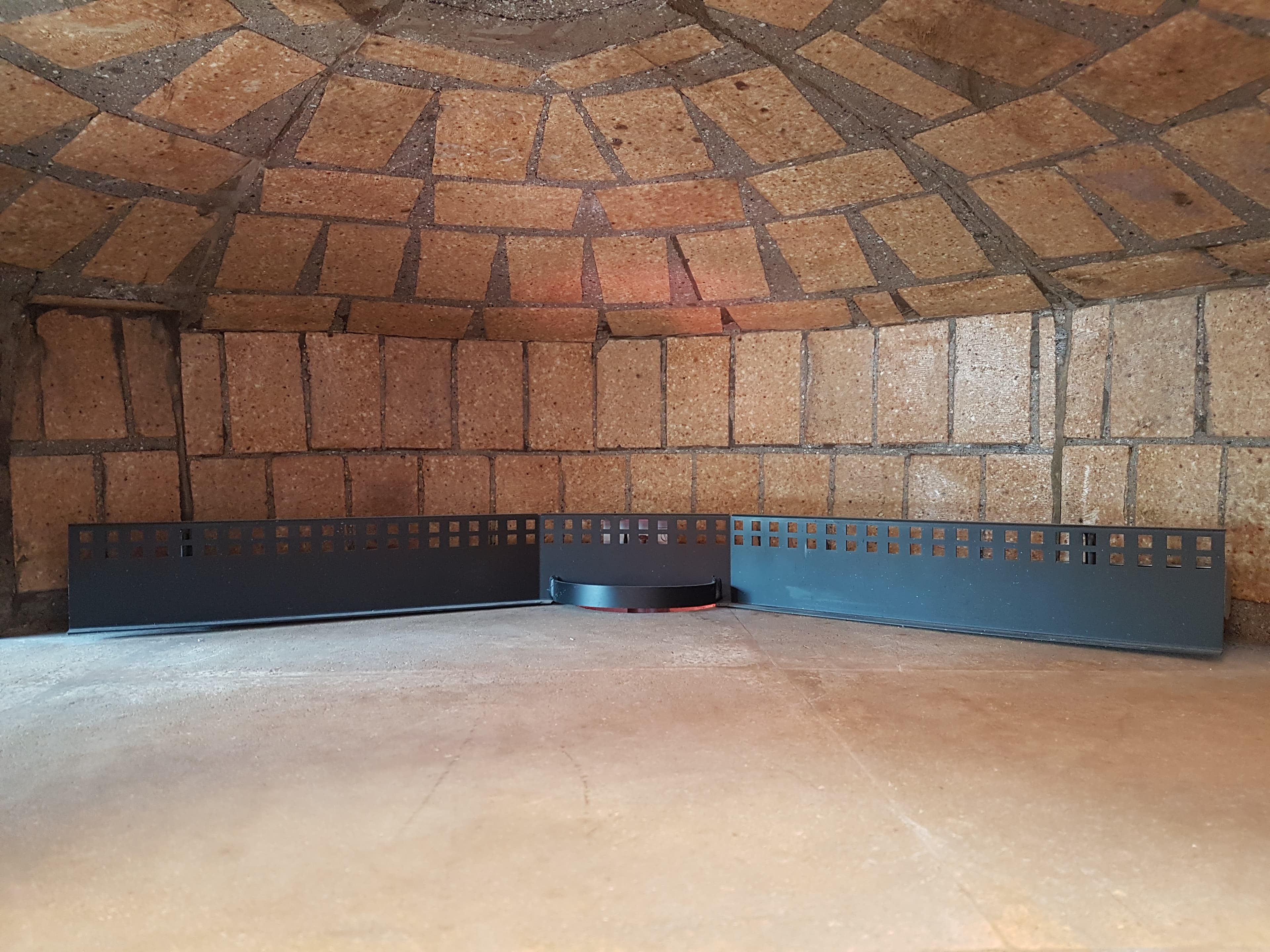
The bond that holds it all together: ceramic vs hydraulic
Refractory bricks are pressed and fired at temperatures above 1,400°C. In this process — called sintering — stable ceramic bonds form and mullite crystallises, a highly refractory mineral. The result is a material that is structurally stable from the very first firing, free of residual water and ready to perform at full capacity.
Refractory concrete (or "castable") works differently: its initial bond is hydraulic, generated by the reaction of calcium aluminate cement with water. During the first heating phases of the oven — between 100°C and 400°C — these hydrates decompose releasing steam. If the process is not controlled with extreme care, the trapped steam generates internal stresses that can cause so-called explosive spalling: the violent detachment of sections of the lining.
How the structure responds to temperature changes
A professional oven is fired up and cooled down every day. Each thermal cycle — from cold to 500°C and back — subjects the refractory material to violent contractions and expansions.
In a brick structure, the mortar joints between bricks have a different elastic modulus from the refractory mass. This micro-joint system allows the structure to "breathe": stresses dissipate without damaging the individual elements. It is the same principle as expansion joints in roads and buildings.
Concrete instead forms a rigid monolithic block. The surface in contact with the flame expands faster than the cooler outer face, generating tensile and compressive stresses that have no outlet. The inevitable result, over time, is structural cracking of the block — with consequent heat loss and progressive performance degradation.
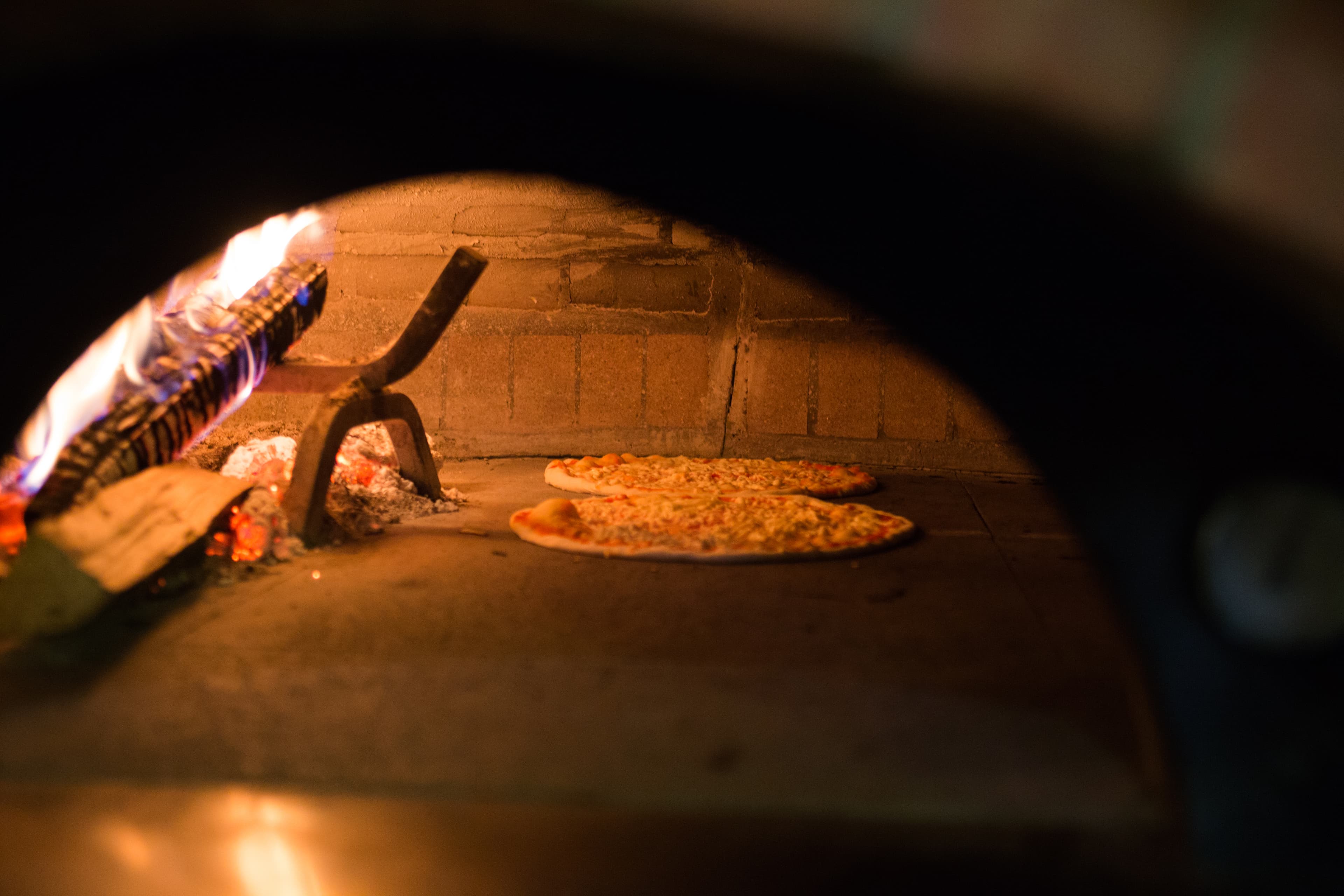
Pizza baking: porosity and the Maillard reaction
The quality of a pizza base also depends on the deck material. Refractory bricks have an open porosity between 15% and 25%: a network of micro-channels that exerts an active capillary action on the dough.
When the pizza is placed on the deck, this network absorbs excess moisture released by the dough. The conductive heat of the brick rapidly triggers the Maillard reaction — the same reaction responsible for the golden, crispy crust — in the absence of excess steam. The base remains dry, uniform, with the texture that distinguishes a brick-oven pizza from any other.
Refractory concrete, far denser and less breathable, does not absorb moisture in the same way. Steam remains beneath the pizza producing a steaming effect that makes the base soggy. Furthermore, the low breathability of concrete promotes condensation build-up and, during downtime, mould growth.
Lifespan and maintenance: what happens after 5 years
Refractory brick oven: average lifespan 10–20+ years, with no deck repairs needed. In case of localised damage, the single brick can be replaced in isolation, without touching the surrounding structure.
Refractory concrete oven: useful life estimated at 3–7 years before structural cracking requires significant repairs. Concrete "patches" tend to detach quickly because the shrinkage coefficient of the new material differs from that of the already-consolidated structure.
The advantage of concrete — it can be cast or sprayed into complex shapes with faster production times — does not compensate, over time, for the reduced lifespan and the impossibility of targeted maintenance.
In summary
The choice of construction material is not a secondary technical detail. It determines how the oven responds to heat, how long it lasts, how it bakes pizza and what it will cost over time. Ceky ovens have been built with refractory bricks since 1935 — not out of tradition, but because the performance justifies it.