How the rotating deck works
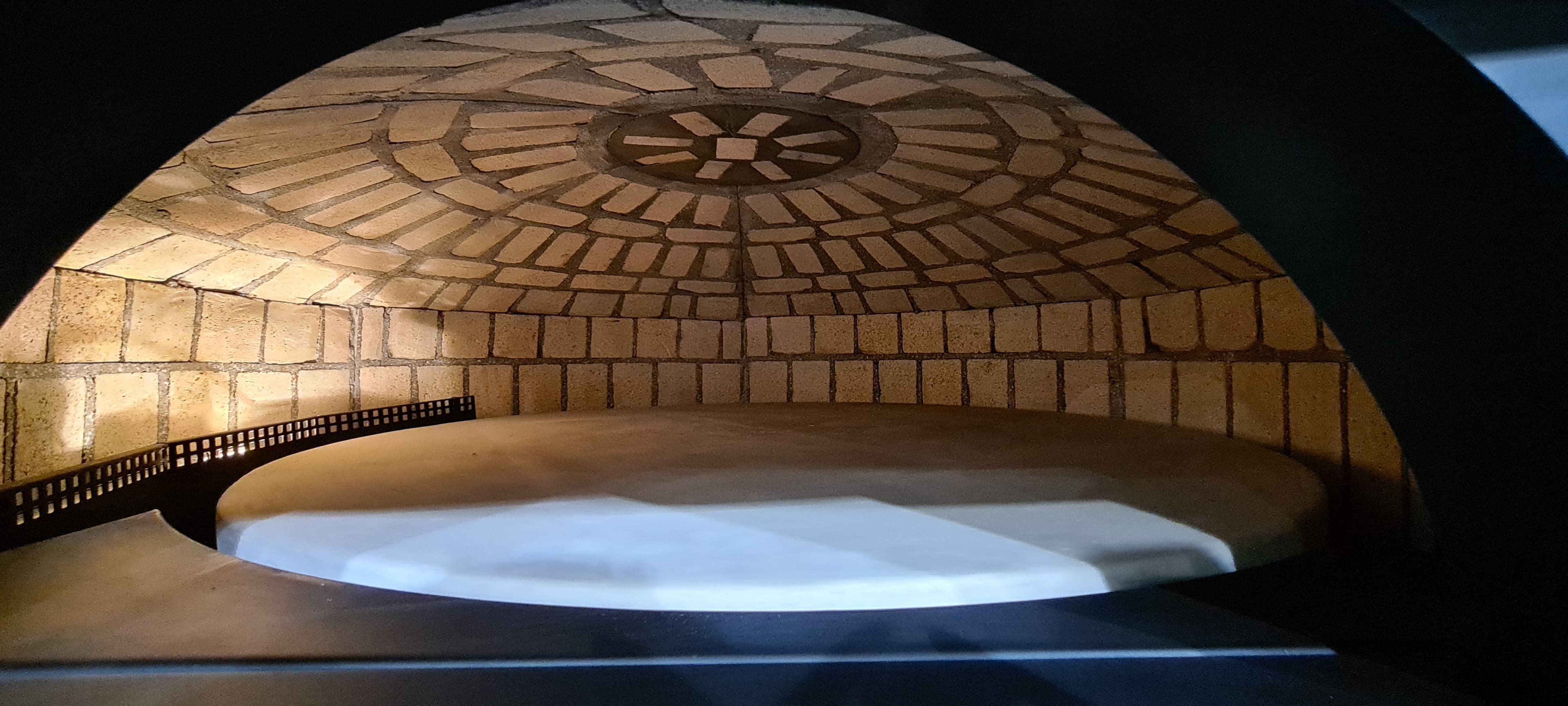
The baking deck rotates slowly on a central axis, driven by an electric motor positioned below the oven floor. The speed is continuously adjustable from 0 to 5.5 rpm — depending on pizza type and desired baking profile.
Pizzas are loaded through the mouth on one side only. As the deck rotates, each pizza completes its circuit evenly exposed to the heat of the chamber and refractory ceiling. At the end of the programmed rotation, the pizza returns to the loading position and the pizza maker removes it.
The deck is always 60 mm refractory brick, identical to static deck ovens. Rotation does not change heat transfer: it only changes the operator's workload. The brick stores thermal energy and releases it to the pizza through conduction and radiation, regardless of movement.
Operational advantages over static deck
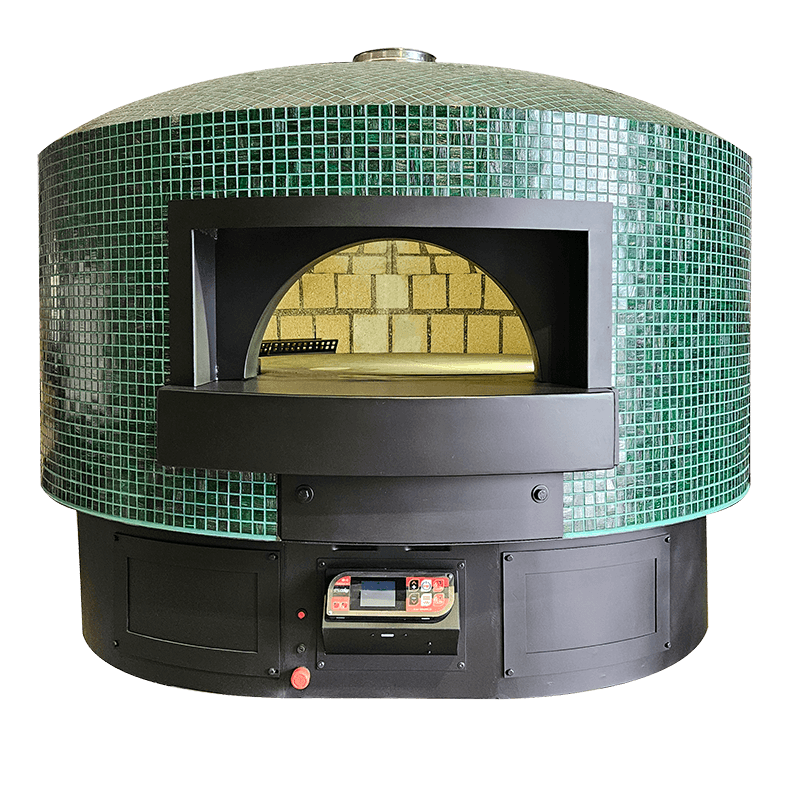
Even baking without manual intervention. With a static deck, the pizza maker must manually turn each pizza during baking to compensate for temperature gradients in the chamber. With a rotating deck, this operation is eliminated: the mechanism ensures every point of the pizza receives the same heat exposure.
Higher volume per shift. By eliminating manual rotation and associated downtime, a pizza maker can manage significantly more pizzas per hour. Ceky rotating deck ovens average a 20–35% increase in volume per shift compared to a static deck of the same size.
Lower dependence on operator experience. Baking consistency depends less on the individual pizza maker's skill. This is particularly relevant in contexts with staff rotation or when opening new locations.
When to choose rotating deck (and when not to)
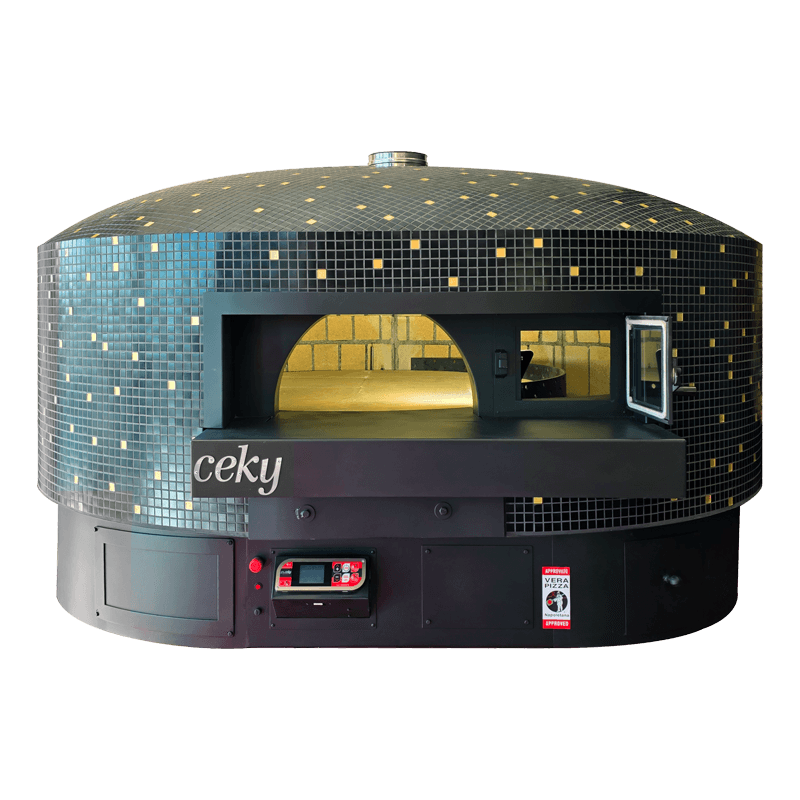
Choose rotating deck if: you manage volumes above 150–200 pizzas per evening, have staff with varying experience levels, want to reduce dependence on a single pizza maker, or operate in a fast-casual context where consistency takes priority over customisation.
Choose static deck if: you use electric ovens and need AVPN certification, or budget is the main constraint — the static deck has a lower purchase cost for the same size and fuel type.
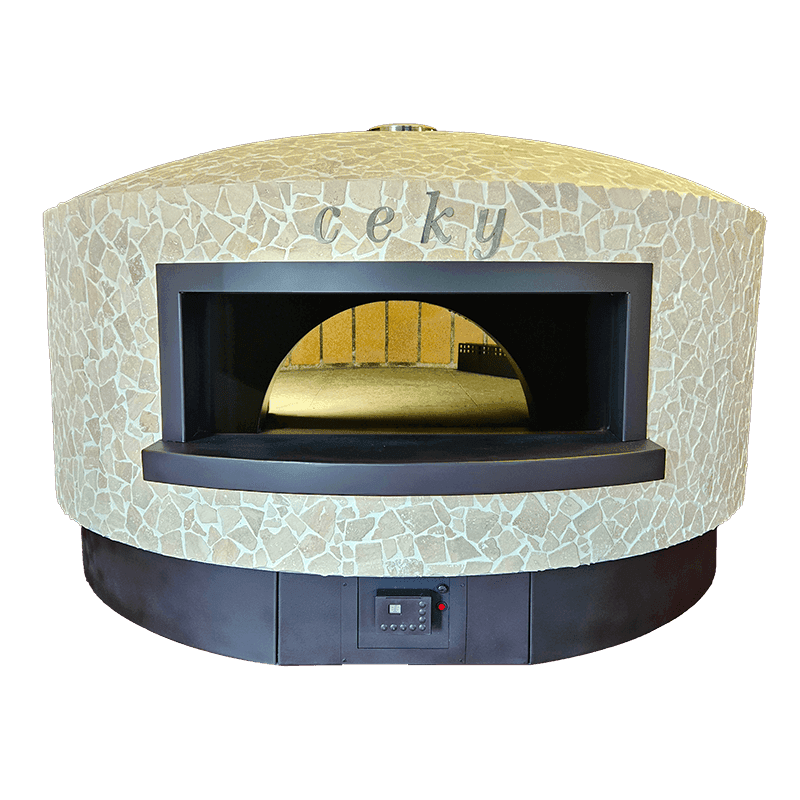
The choice is not final: many pizzerias operate with both — a static oven for certified Neapolitan pizzas and a rotating one for high-volume production. Ceky produces both configurations in all fuel types (wood, gas, electric, MX line).
Static vs Rotating — direct comparison
AVPN certification
Yes
Manual pizza rotation
Required
Volume per shift
Baseline
Operator dependence
High
Baking quality
Excellent
Refractory deck
60 mm
Adjustable speed
—
Available fuel types
Wood, Gas, Electric, MX
AVPN certification
Yes (except electric rotating)
Manual pizza rotation
Eliminated
Volume per shift
+20–35%
Operator dependence
Reduced
Baking quality
Excellent
Refractory deck
60 mm
Adjustable speed
0–5.5 rpm
Available fuel types
Wood, Gas, Electric, MX
In summary
The rotating deck is not superior to the static deck in absolute terms: it is superior for specific operational contexts. Baking quality is identical — it depends on the refractory, not the rotation. The difference lies in production capacity and reduced human error margin.
If you use electric ovens and need AVPN certification, a static deck is mandatory. For wood, gas and MX line, you can have both a rotating deck and AVPN certification together. If your main goal is volume with consistent baking, the rotating deck is the right tool across all fuel types. Ceky produces both configurations with the same refractory construction and the same average twenty-year lifespan.