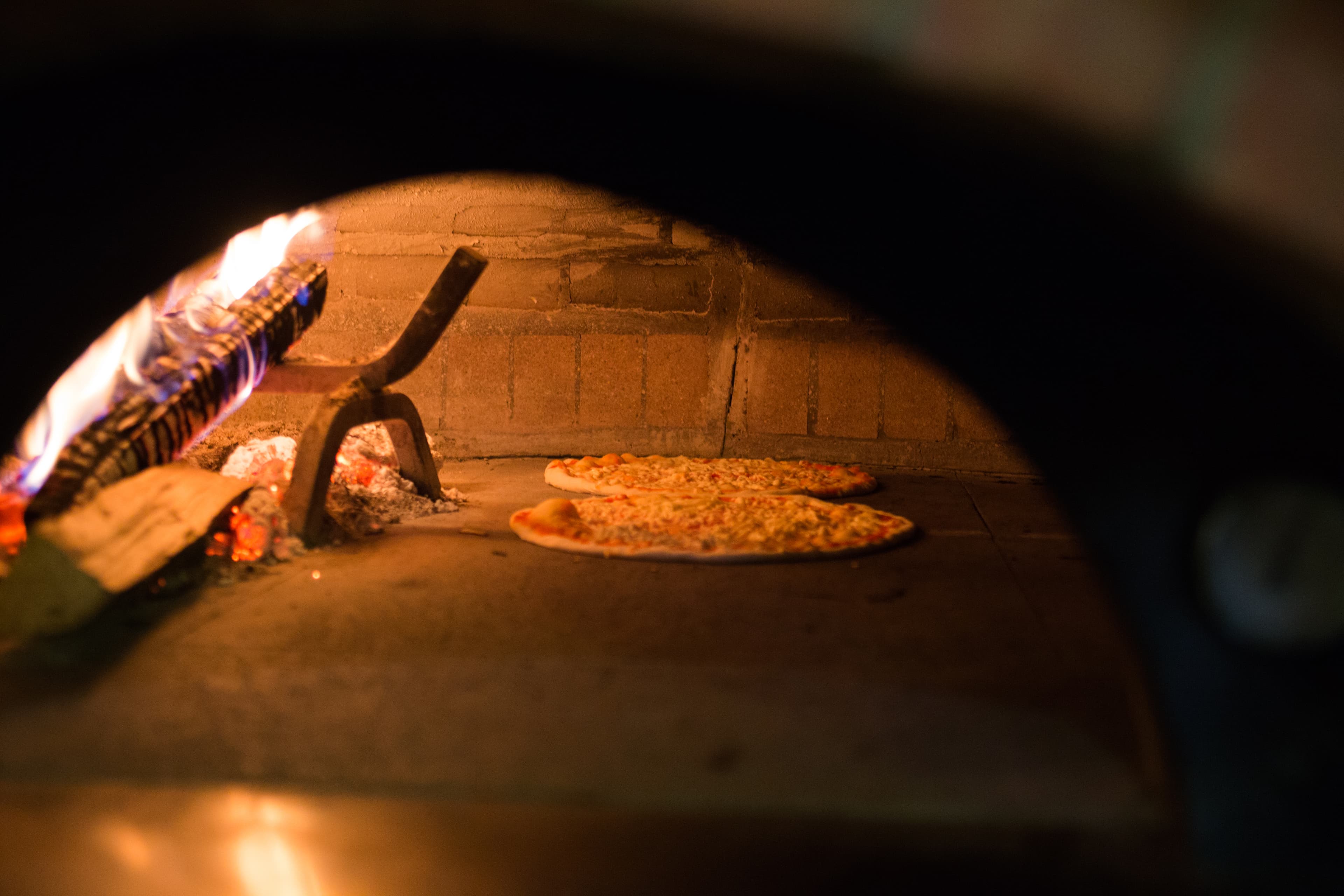
Wood-fired oven
Wood-fired ovens reach the highest temperatures: the deck can touch 480–500°C in high-turnover Neapolitan pizzerias. The live flame heats the dome directly, generating intense radiation that bakes a pizza in 60–90 seconds.
Wood transfers no flavour whatsoever to the dough: combustion is complete and fumes exit through the flue. The aromatic profile of Neapolitan pizza depends on the ingredients and dough fermentation, not the heat source. The widespread belief to the contrary has no technical basis.
The main limitation is operational: temperature depends on manual fire management, requires wood storage and produces ash to dispose of daily. A flue is mandatory and must be sized for significant throughput.
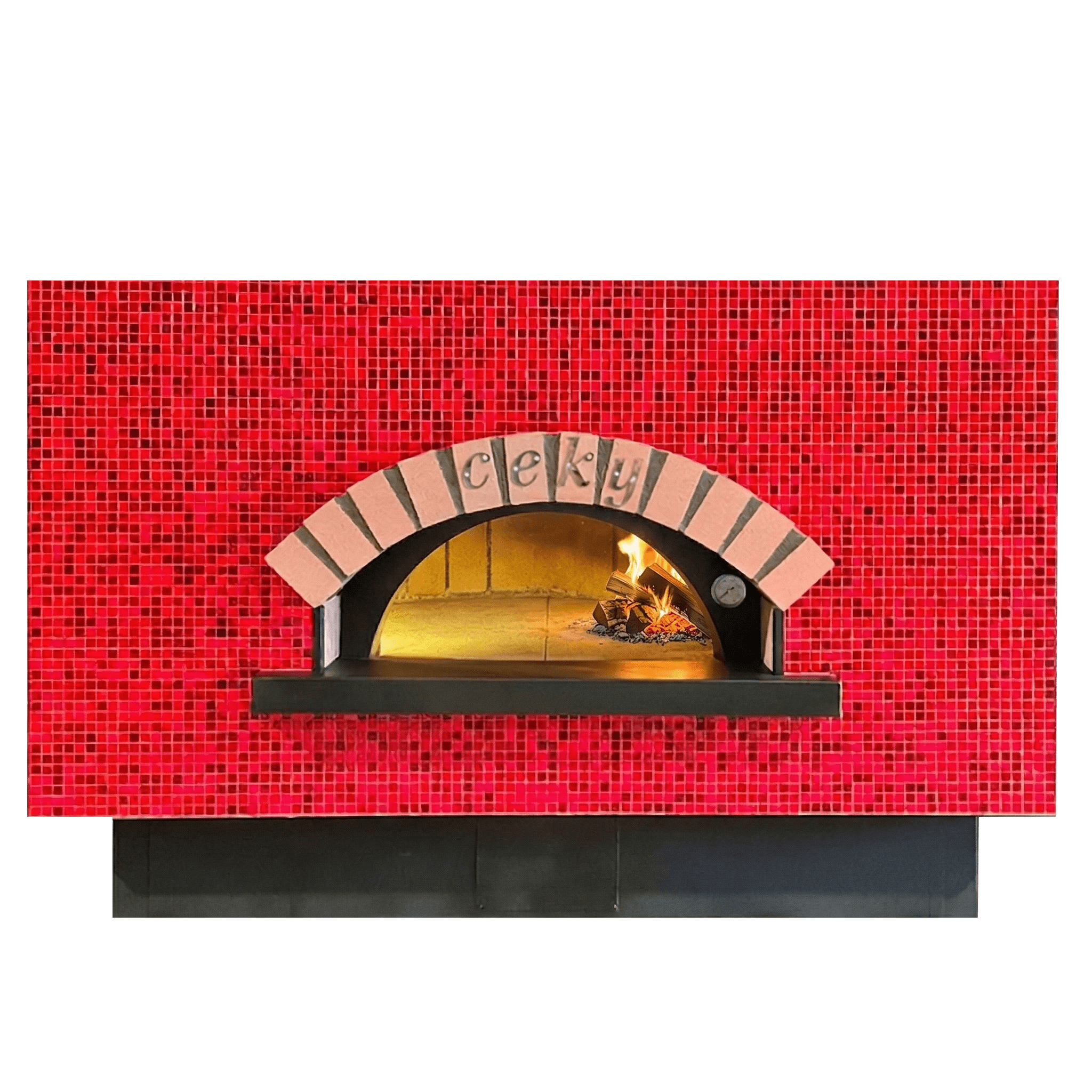
Gas oven
The gas oven combines the thermal performance of a refractory brick oven with precise temperature control via digital thermostat. Chamber burners heat the bricks in the same way as wood — through flame radiation and deck conduction — without the variability introduced by manual fire management.
Compared to wood, preheat is faster (30–45 minutes vs 60–90) and service is more consistent: the burner holds the target temperature without operator intervention. This is decisive in high-volume venues or with extended service shifts.
Ceky gas ovens — both static and rotating deck — are AVPN-certified. They require a gas line connection and a flue.
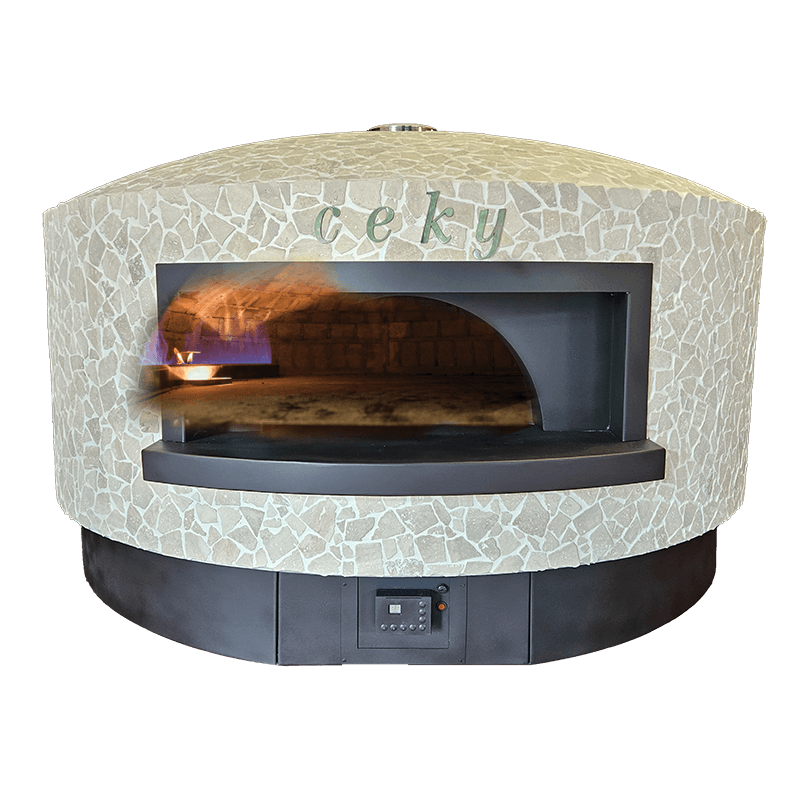
Electric oven
The electric oven offers the finest control: ceiling and deck are managed by independent heating elements, allowing different temperatures to be set based on pizza type and dough. This flexibility is difficult to achieve with wood or gas.
The most relevant structural advantage is the absence of combustion fumes: no flue, no gas connection. It is the only practical solution for dark kitchens, bakery labs, venues with architectural constraints, or upper floors without ventilation outlets.
On the AVPN front: Ceky electric ovens with static deck are certified. Rotating-deck ovens — regardless of fuel type — do not meet the specification, which requires baking on a fixed deck.
Direct comparison
Max temperature
450–500°C
Temperature control
Manual — operator-dependent
Preheat time
60–90 min
Flue required
Yes
AVPN certification
Yes
Fuel management
Storage & manual loading
Ideal service volume
Medium–high
Max temperature
400–480°C
Temperature control
Precise — digital thermostat
Preheat time
30–45 min
Flue required
Yes
AVPN certification
Yes
Fuel management
Gas line connection
Ideal service volume
High — continuous service
Max temperature
400–450°C
Temperature control
Precise — independent deck & ceiling
Preheat time
20–40 min
Flue required
No
AVPN certification
Static deck only
Fuel management
Electricity only
Ideal service volume
Medium — flexible
In summary
There is no universally superior fuel: the choice depends on context. Wood is the traditional solution for those who want maximum temperature and have the space to manage it. Gas provides control, fast preheat and consistency at high volumes. Electric is the answer when the venue does not permit combustion systems.
What remains constant — regardless of fuel — is the construction: refractory bricks store and return heat in the same way with wood, gas or electric elements. Baking quality depends on the refractory, not the flame.