The consumption structure: pre-heating and maintenance
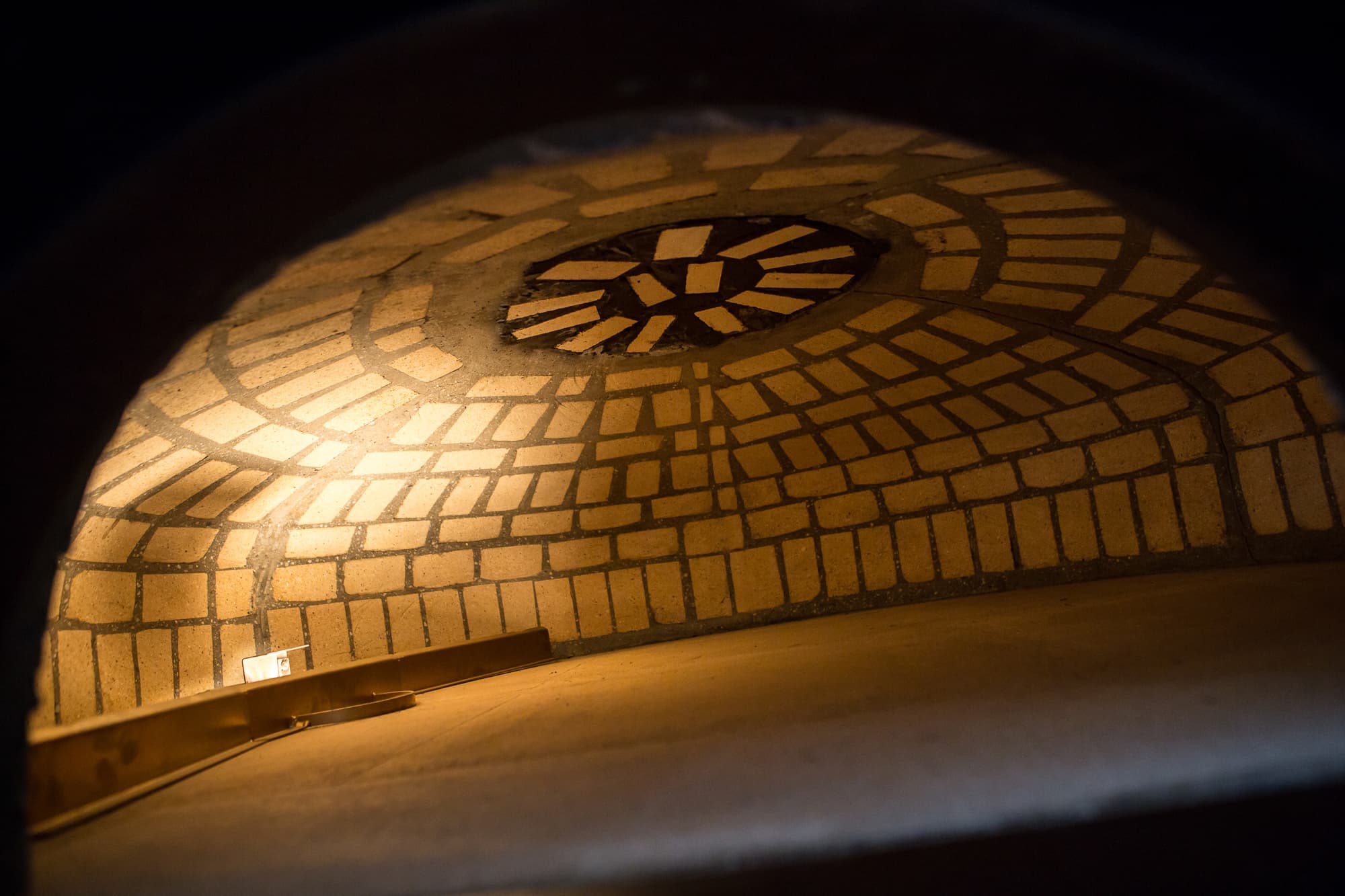
The energy consumption of a professional pizza oven divides into two phases with very different dynamics. The pre-heating phase — from ambient temperature to operating temperature — requires maximum available power for a contained period: 45–90 minutes depending on fuel type and the thermal mass of the oven. It is an unavoidable phase, but it happens only once per service.
The maintenance phase is where the majority of energy consumed over a full day is concentrated. The oven stays at operating temperature for 4–8 hours, and the heating system intervenes cyclically to compensate for thermal losses and the heat absorbed by the pizzas being baked. This phase — not the initial pre-heating — is where the main energy-saving levers operate.
An oven with good insulation loses less heat to the surrounding environment, reducing the frequency and intensity of burner or element interventions. The difference between standard and high-quality insulation can translate into a 15–30% reduction in maintenance-phase consumption — a difference that accumulates over every service and becomes significant by year end.
Refractory deck and thermal inertia: why thickness matters
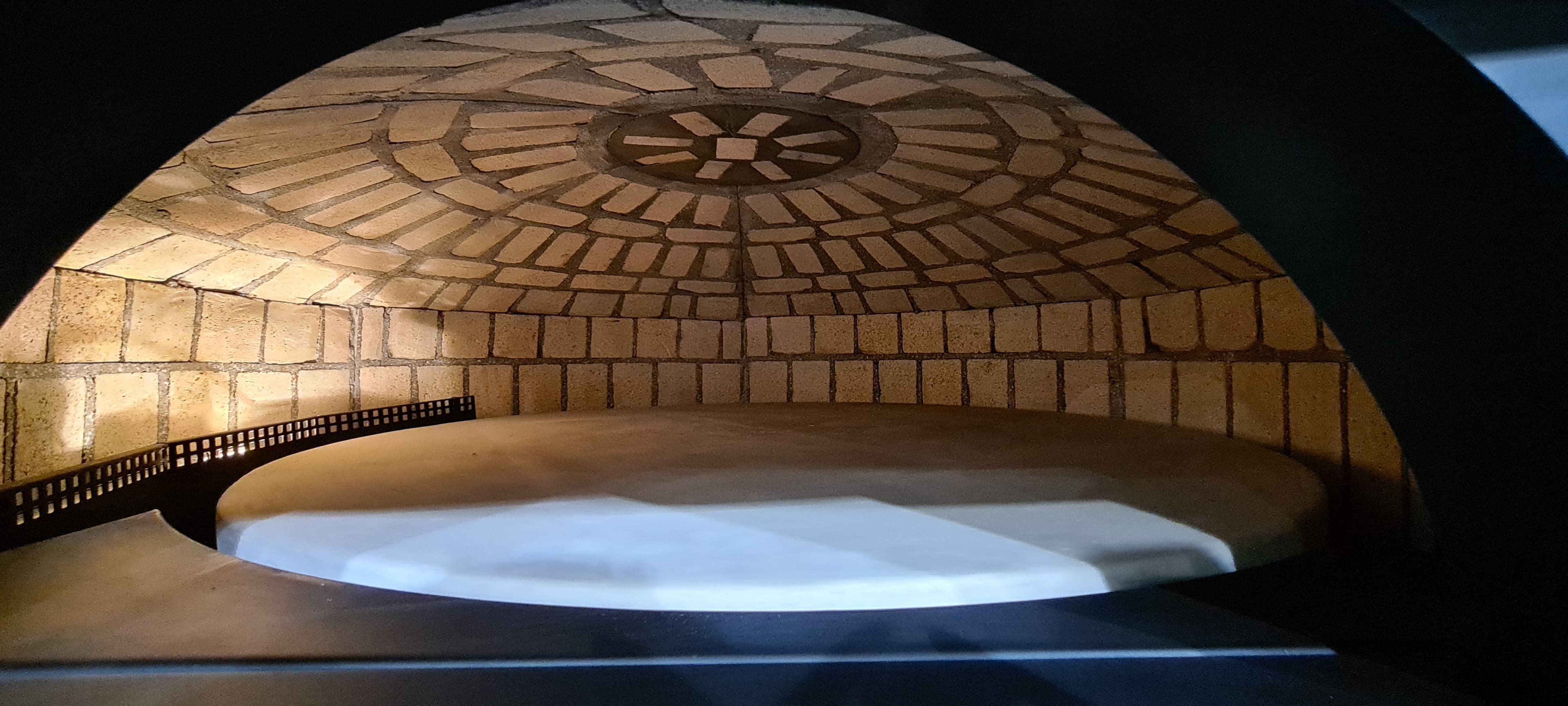
The 60 mm refractory bricks that form the deck of Ceky ovens store thermal energy during pre-heating and release it gradually during service. This thermal inertia has a direct effect on consumption: a deck with high thermal mass recovers its surface temperature after each pizza without requiring immediate intervention from the burner or elements.
A thinner deck — or one made from materials with lower thermal conductivity — transfers heat more quickly to the pizza and takes longer to recover. The result is a more frequent heating cycle with a less stable consumption profile: power peaks that repeat with every load, especially during peak service with the oven consistently occupied.
Refractory longevity has an indirect impact on long-term efficiency. Ceky refractory bricks withstand repeated thermal cycles for over 20 years while maintaining their thermal storage properties. A deteriorating refractory loses thermal efficiency before visible performance decline: the typical symptom is a gradual increase in recovery times and maintenance-phase consumption.
Digital control and eco systems
Modern professional ovens integrate electronic control systems that regulate temperature with a precision of ±5°C. In gas ovens, this translates into continuous flame modulation rather than simple on/off cycling at full power: the burner operates at reduced intensity to maintain the thermal target, with lower average consumption than older analog systems.
In professional electric ovens, element control is handled by SSR (Solid State Relay) or triac devices — solid-state components that switch the heating elements on and off at very high frequency. Unlike electromechanical relays, SSRs introduce no mechanical wear and enable precise current modulation: power delivery is not simply on or off, but continuously modulated as a function of the delta between measured temperature and the set target.
The high switching frequency of SSRs has a direct effect on the Incoloy heating elements — a nickel-chrome-iron alloy used in professional ovens for its thermal resistance and infrared emission capability. The ON/OFF frequency is high enough to keep the element in a state of continuous incandescence: the element does not cool between cycles and continues emitting infrared radiation even during nominally off phases. The result is a constant thermal flux toward the deck and dome, without the power spikes typical of slow-switching systems.
Eco mode uses the same SSRs to alternate the operation of the upper and lower element groups rather than activating them simultaneously. The two groups never operate in parallel at maximum draw — reducing the instantaneous load on the electrical phases — while the thermal inertia of the Incoloy ensures continuous infrared emission even during each group's off phases. The oven maintains its set operating temperature up to 500°C while distributing the electrical load rationally.
Gas vs electric: consumption profiles compared
Gas and electric ovens have structurally different consumption profiles. The difference in operating cost depends primarily on local energy prices, not only on kWh consumed.
Pre-heating power
25–35 kW thermal
Maintenance consumption
8–15 kW (burner cycling)
Pre-heating time
60–90 min
Operating temperature
up to 500°C
Eco mode
Burner modulation
Flue required
Yes
Pre-heating power
11–15 kW
Maintenance consumption
4–6 kW (element average)
Pre-heating time
45–60 min
Operating temperature
up to 500°C
Eco mode
Alternating upper/lower element groups
Flue required
No
In summary
The energy efficiency of a professional pizza oven depends on the combination of three elements: insulation quality and refractory thickness, precision of the thermal control system, and — in electric ovens — eco mode, which alternates the upper and lower element groups to reduce absorption peaks. Each primarily affects the maintenance phase, which represents the largest share of daily consumption.
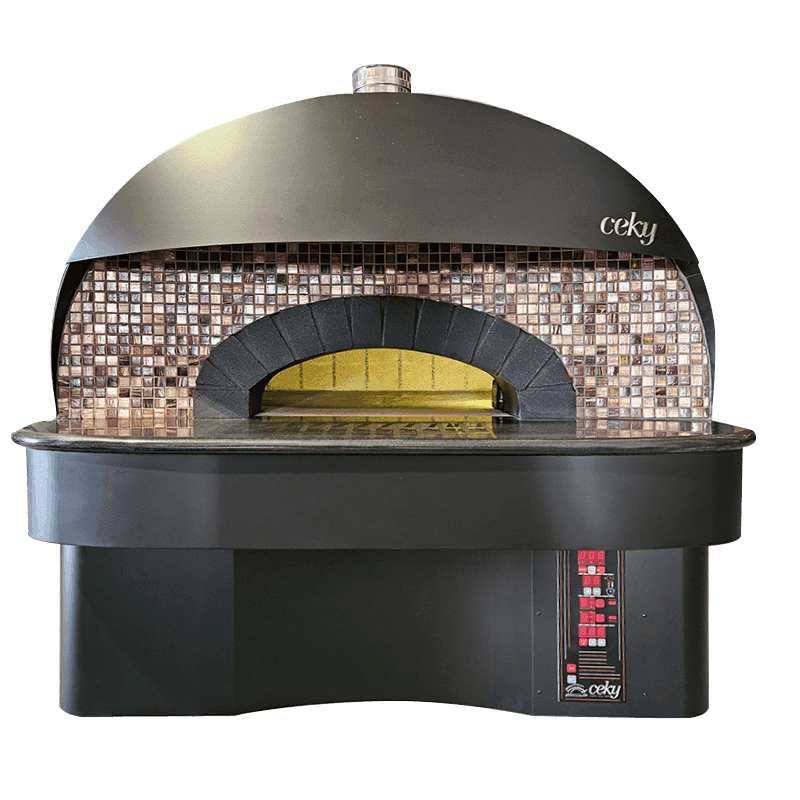
Ceky ovens are available in wood, gas and electric configurations, all with a 60 mm hand-laid refractory brick deck. The choice of optimal fuel depends on the operational profile of the pizzeria — number of services, pizza volume, availability of gas supply or flue — rather than on an absolute efficiency ranking.