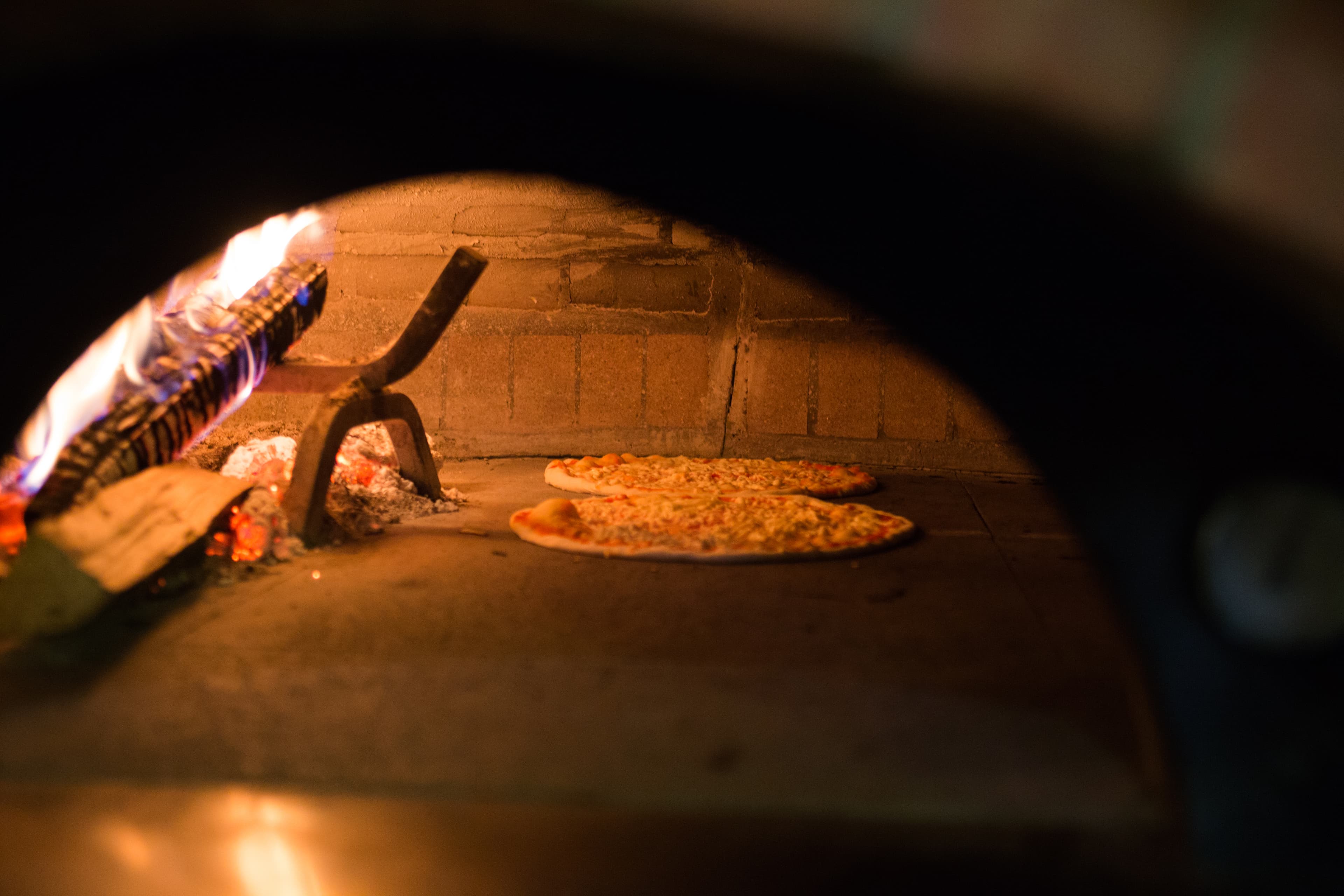
Capillary porosity and wicking action
The secret of a crispy base lies in the open porosity of refractory brick, which ranges between 15% and 25%. This micro-channel network works like a suction pump: when a cold, high-hydration dough is placed on the scorching deck, the brick actively absorbs excess moisture released by the base.
With moisture absorbed, conductive heat acts directly on the starch, rapidly triggering the Maillard reaction and sugar caramelisation. The result is a perfectly dry, crispy, and uniform base.
Vibrated concrete, far denser and lacking this capillary network, does not absorb moisture. Steam remains trapped between the deck and the pizza, producing a steaming effect: the dough bakes in a steam-saturated environment and turns soft and chewy. This effect worsens with high-density concrete or surfaces made artificially rough — macroscopic roughness does not substitute the microscopic porosity of brick.
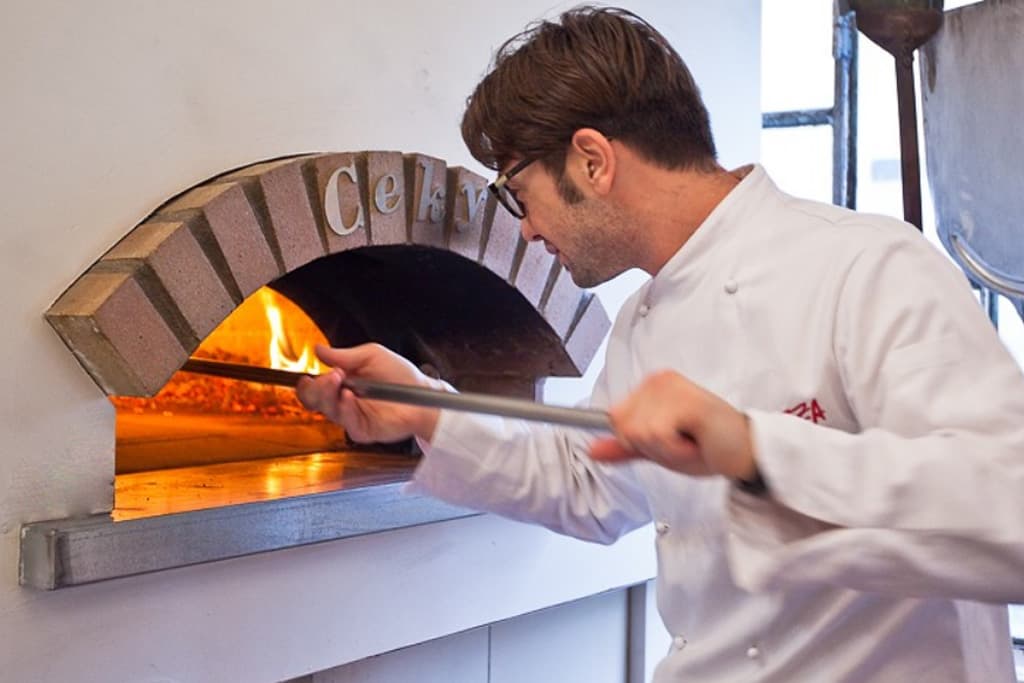
Thermal inertia: the oven as a battery
Refractory bricks are formed under high industrial pressure, giving them high density and exceptional thermal mass. They act as a thermal battery: storing large amounts of heat during warm-up and releasing it slowly and steadily throughout service.
When a cold pizza is loaded or the oven door is opened, the temperature drop at the brick surface is negligible — energy is immediately restored from the layers below. This allows pizzas to be loaded in rapid succession without waiting.
Concrete, with internal air bubbles formed during casting, often has lower thermal mass. It suffers more severe localised thermal shocks and requires longer recovery times between pizzas — a significant constraint during high-intensity service.
Infrared radiation: baking from below and above
Inside a dome oven, baking does not occur primarily through hot air convection, but through thermal radiation. The quality of this radiation depends on the emissivity of the refractory material.
Refractory bricks have a surface emissivity between 0.75 and 0.93. Their microscopically rough finish emits far-infrared waves that penetrate deep into the dough, ensuring the core of the pizza bakes evenly without burning the outer surface.
Concrete with fluidifying additives creates smoother surfaces with glass-like characteristics that generate parasitic reflections: part of the radiant energy is reflected rather than absorbed by the dough, producing uneven baking.
Breathability, hygiene and surface durability
Refractory bricks "breathe": during preheating they gradually release moisture absorbed from the environment, preventing condensation build-up. In concrete structures — less breathable — condensation accumulated in micro-cracks during downtime can promote mould or bacteria growth.
From a food hygiene standpoint, sintered bricks have a surface hardness close to grade 7 on the Mohs scale. They withstand continuous abrasion from peels, brushes and wood without degrading. Concrete, with its cementitious matrix, is more prone to scratches and wear — risking cement dust generation ("dusting") that could contaminate food.