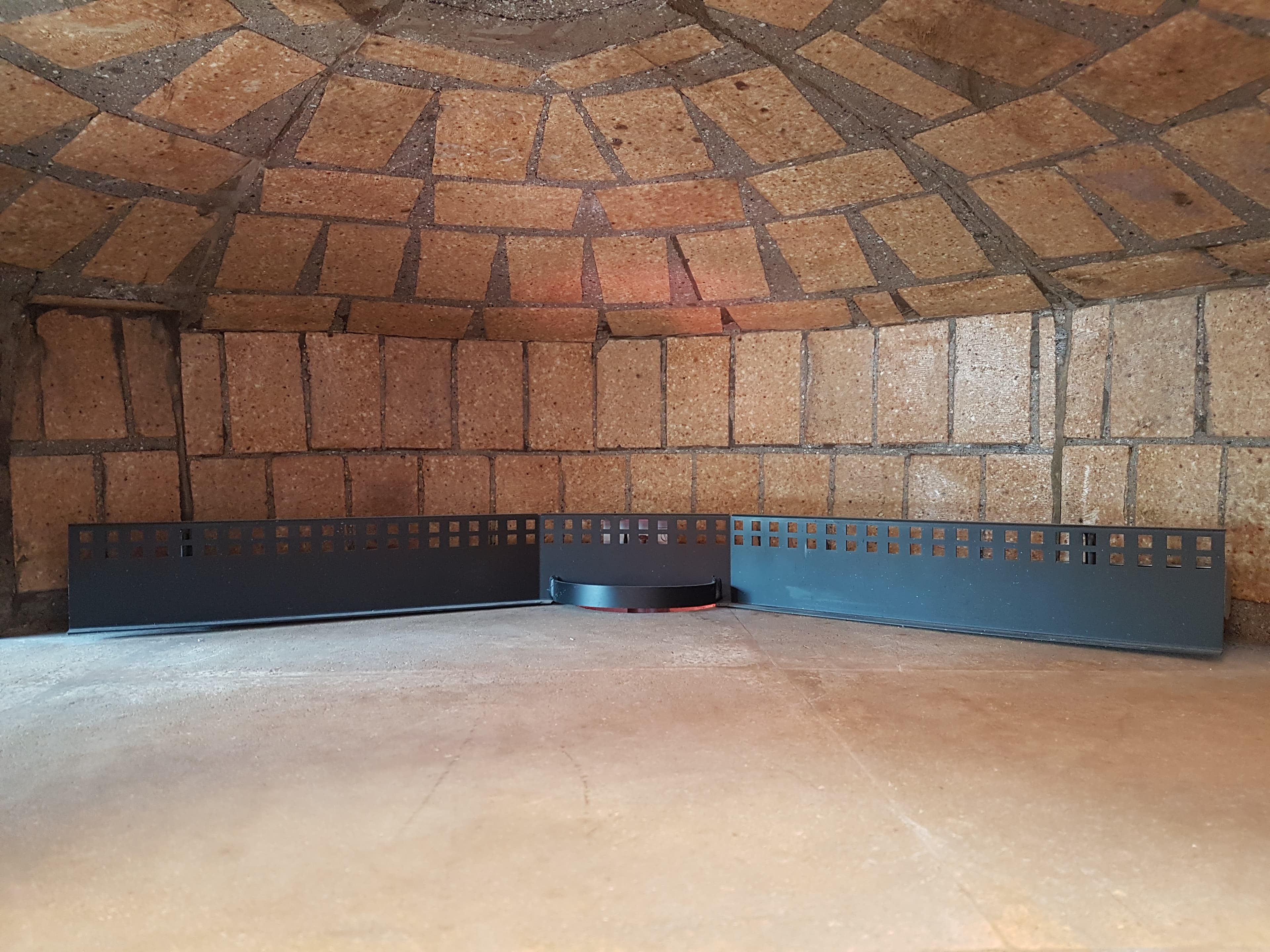
Expected production volume
Expected volume is the most important parameter. Overestimating causes energy waste and excessive investment; underestimating creates operational bottlenecks that cap revenue.
Practical rule: estimate peak hour pizzas and choose an oven with 20–30% more capacity. This margin absorbs service variability without saturating the oven.
Ceky ovens cover requirements from 6 simultaneous pizzas (100 cm models, ideal for neighbourhood pizzerias or first openings) to 22 pizzas (150 cm rotating deck ovens, for high-volume or intensive delivery operations).
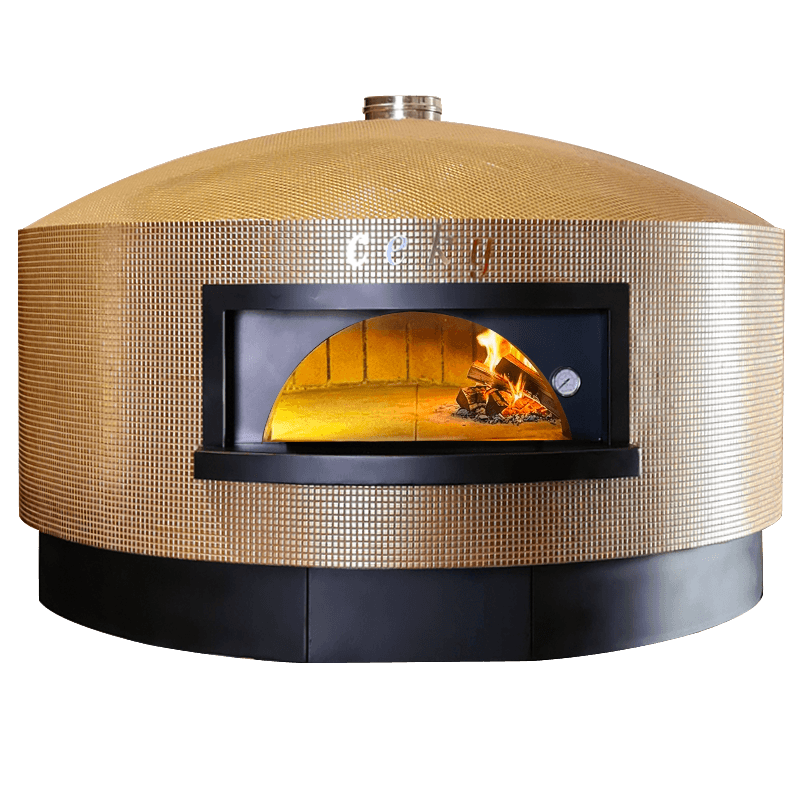
Available space and structural constraints
The oven occupies fixed space and creates permanent constraints in the kitchen layout. Before choosing a model, verify: floor footprint, minimum operational space in front (at least 100 cm), flue position and diameter, and structural floor load for larger ovens.
Flue: wood and gas ovens require a flue sized for throughput. If the venue has no available external outlets, an electric oven is the only practical solution — it requires neither a flue nor a gas connection.
Ceky offers a free technical site visit for venues in the opening phase. The technical team checks measurements, installation constraints and recommends the most suitable model before contract signing.
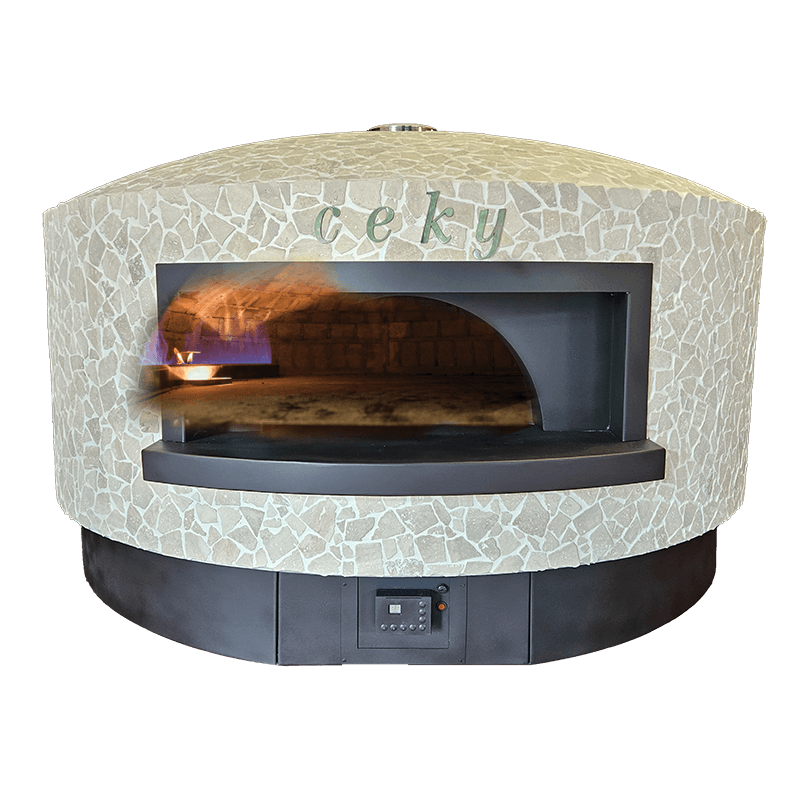
Fuel type: wood, gas or electric
The fuel choice depends on three factors: structural constraints (flue availability), the pizza maker's operational preferences, and the venue's positioning.
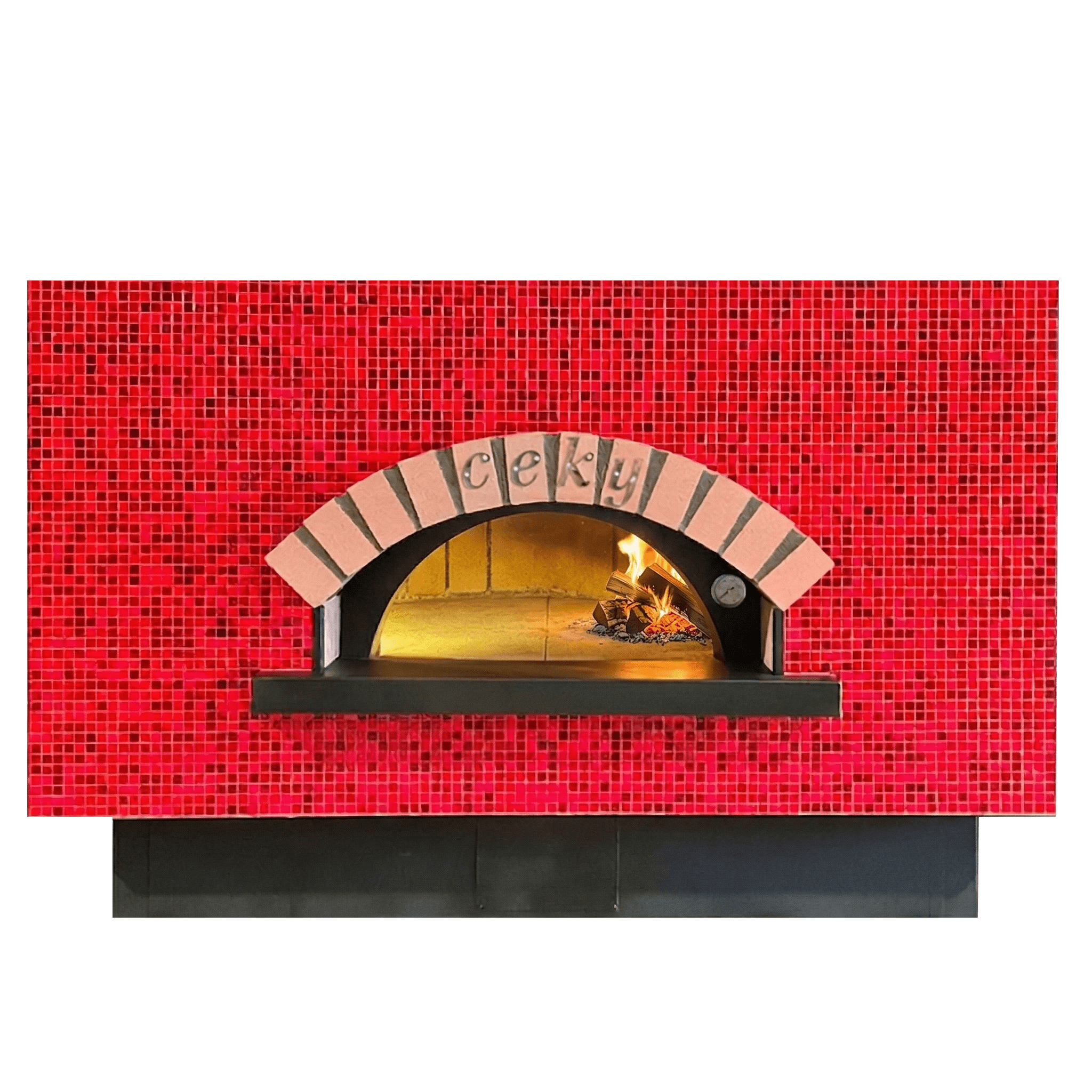
Wood — maximum temperature, manual fire management, wood storage, mandatory flue. Ideal for those banking on the perceived value of tradition and who handle operational variability well.
Gas — precise control, faster preheat, AVPN certification available, mandatory flue. The most common choice for high volume and consistent service. Electric — no flue, fine ceiling and deck control, fast startup. Ideal for venues with architectural constraints or dark kitchens.
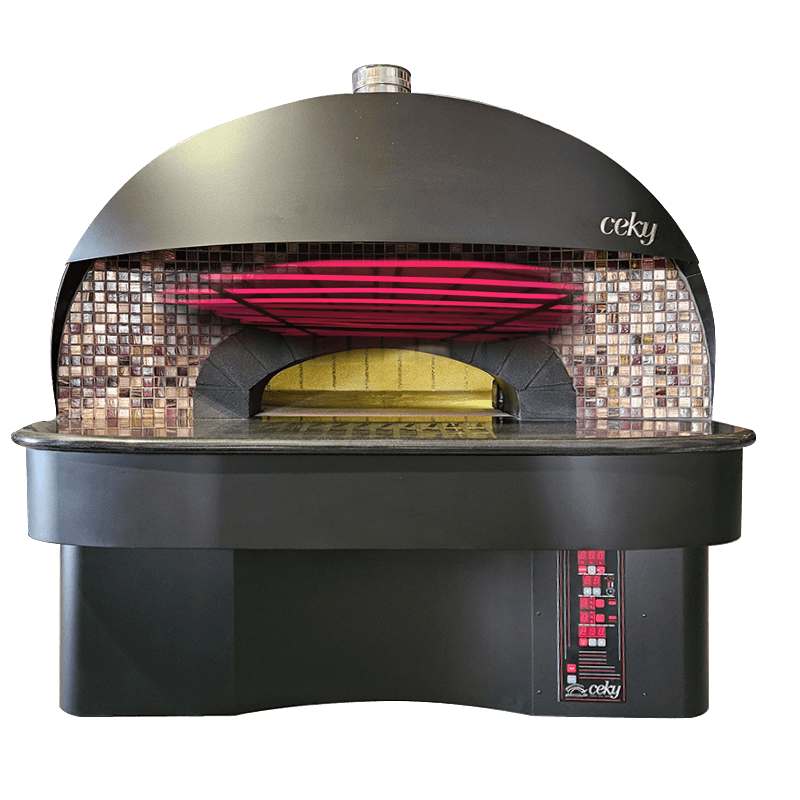
Static or rotating deck
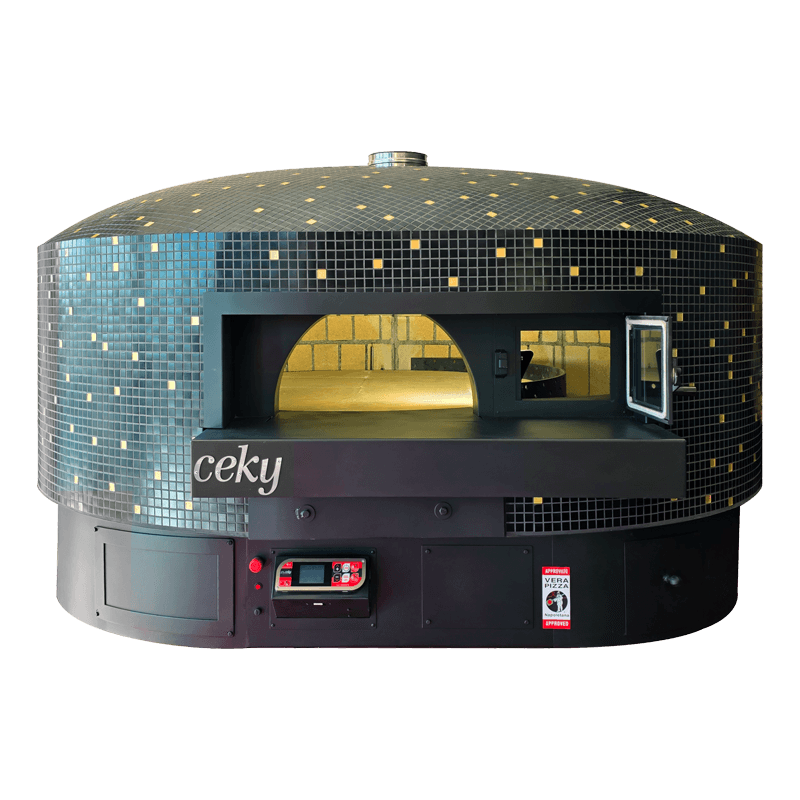
A static deck requires the pizza maker to manually turn each pizza during baking. A rotating deck automates this, increasing volume per shift by 20–35% and reducing dependence on individual operator experience.
Choose static deck if: you use electric ovens and need AVPN certification, or budget is the main constraint — at the same size and fuel type, the static deck has a lower purchase cost. For everything else, the rotating deck produces more with the same quality.
Choose rotating deck if: you manage volumes above 150–200 pizzas per evening, have staff rotation, or operate in a context where consistency takes priority over customisation.
Budget and total cost of ownership
The purchase price is only part of the total cost. Also consider: installation and connection costs, energy consumption over time, routine and extraordinary maintenance, and average oven lifespan.
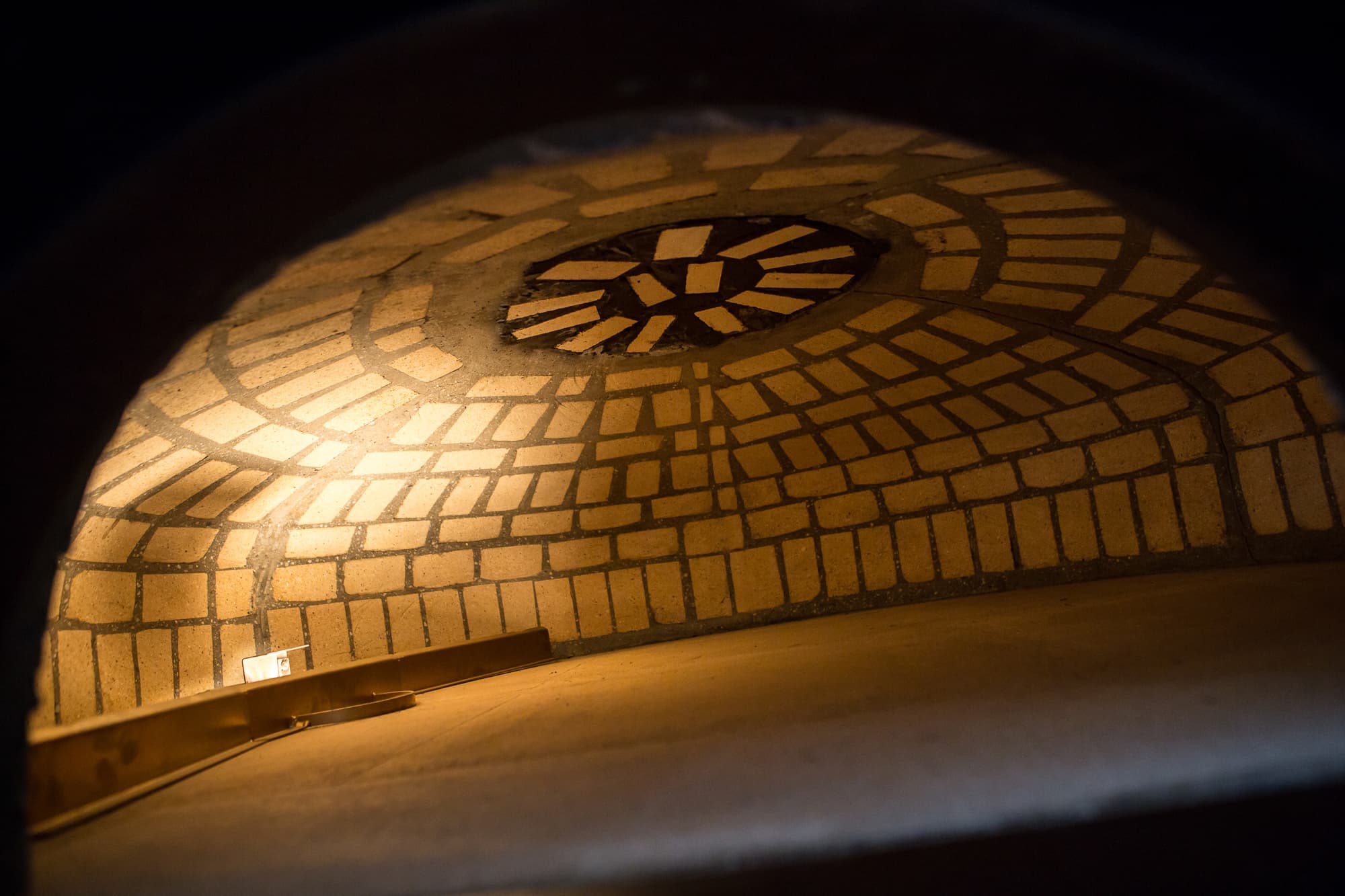
Ceky refractory brick ovens have an average lifespan of twenty years, vs the typical 7–10 years of industrial concrete ovens. This significantly affects the cost per pizza over the oven's lifetime.
Rule of thumb: don't compare purchase price alone. A higher-quality oven with a 20-year lifespan almost always beats a budget oven with an 8-year lifespan when you calculate the annualised cost.
Certifications and positioning
If the pizzeria's positioning includes AVPN certification, the deck choice depends on the fuel type. With wood, gas and MX line, certification is available on both static and rotating decks. With electric, only the static deck is AVPN-certifiable — the electric rotating oven is the one combination excluded.
AVPN certification is not legally mandatory, but has concrete commercial value: it allows use of the 'Vera Pizza Napoletana' trademark, is recognised by informed customers and may be a requirement for some international restaurant guides and platforms.
If AVPN is not a goal, the choice narrows to operational parameters: volume, space, fuel and budget.
Decision summary
AVPN certification required with electric
Static deck mandatory
AVPN certification with wood, gas or MX
Static or rotating deck — both certifiable
No flue available
Electric oven
Volume > 200 pizzas/evening
Rotating deck, 130–150 cm oven
Volume < 100 pizzas/evening
Static deck, 100–120 cm oven
High staff turnover
Rotating deck — less operator dependence
Limited budget and small space
Gas static deck, 100–110 cm size
Dark kitchen / pure delivery
Electric or gas, rotating deck
Limited budget, lower volumes
Static deck — lower purchase cost
In summary
There is no 'best' professional pizza oven in absolute terms — there is the right one for your specific context. The correct process: (1) define your peak hour volume, (2) verify the venue's structural constraints, (3) choose fuel based on those constraints, (4) decide static or rotating deck based on volume and certification requirements, (5) evaluate total cost of ownership over 10–15 years, not just purchase price.
Ceky has been manufacturing professional ovens since 1935 in all configurations: wood, gas, electric, MX hybrid line, static and rotating deck, from 100 to 150 cm. The technical team is available for a free consultation before purchase.