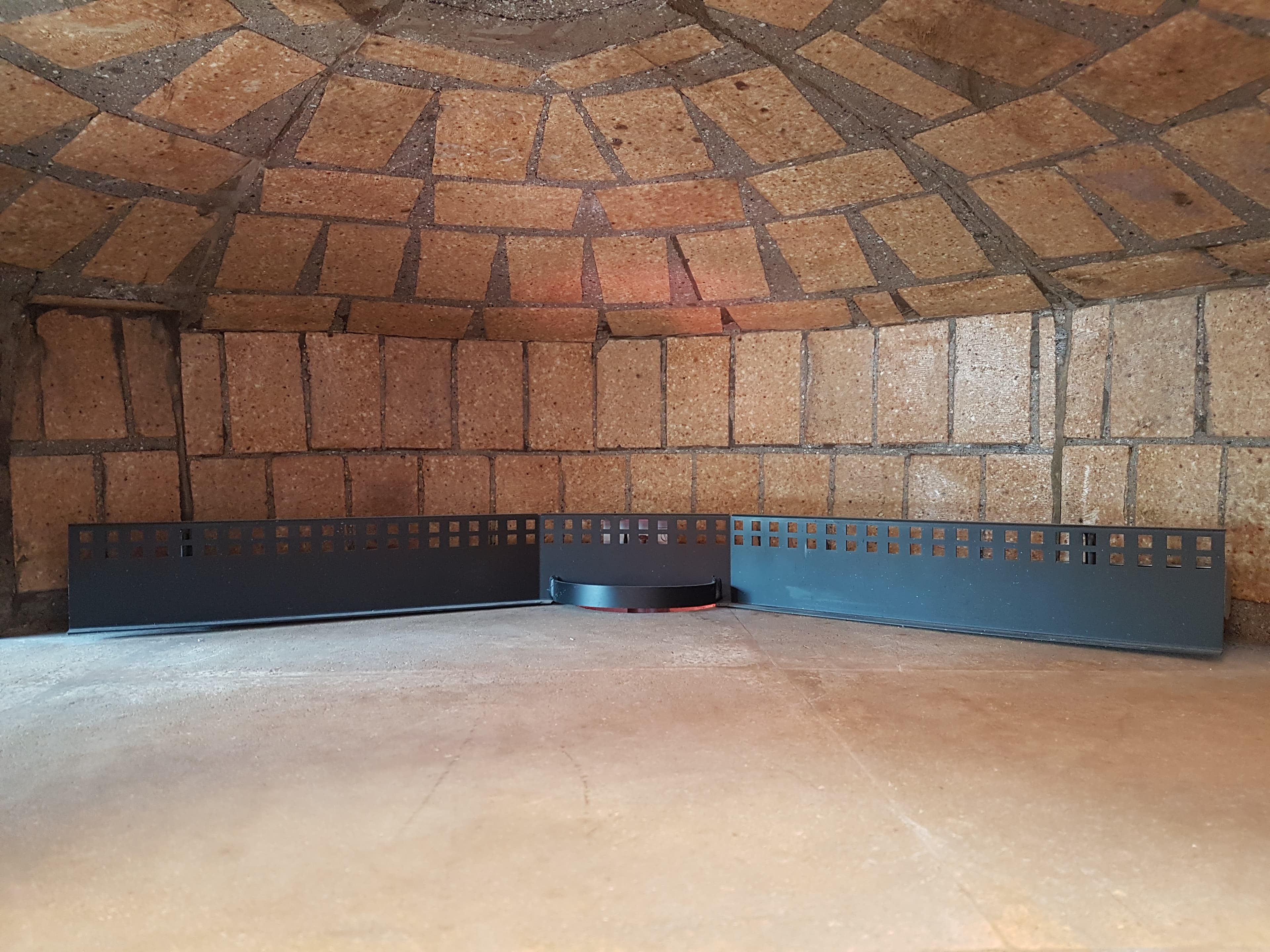
Refractory brick or cast mix: two different constructions
The professional pizza oven market features two construction technologies for the baking deck. The first uses proper refractory bricks: individual elements, pressed and fired separately, hand-laid one by one with mortar joints. The second uses cast refractory mixes — blends based on materials such as ground chamotte with a cementitious binder, poured into a mould to form a single monolithic block.
The industrial process of cast mix is faster and more uniform in production: it can be made in any shape and does not require the skilled labour needed for brick-by-brick laying. But this monolithic structure — lacking expansion joints — is its main limitation: daily thermal cycles (firing, service, cooling) generate internal stresses that over time lead to cracking. Bricks, with their mortar joints, dissipate those stresses without being damaged.
60 mm thickness: the physics of thermal inertia
Deck thickness determines the thermal mass available for service. Thermal mass is the amount of energy the brick stores before heating up: the higher it is, the more the deck releases heat to consecutive pizzas without cooling below operating temperature.
A 40 mm deck reaches temperature more quickly — less mass to heat — but discharges fast under intense service. After 3-4 pizzas loaded in rapid succession, surface temperature begins to drop, requiring recovery pauses that break production rhythm.
With 60 mm, the thermal reserve stored in the brick depth is proportionally greater. In high-volume service — 200-300 pizzas per shift — this translates into stable surface temperature throughout the service and significantly shorter recovery times between loadings. This is not a marginal difference: it is the gap between a consistent base on the hundredth pizza and one requiring time and temperature adjustments mid-shift.
Density and porosity: the invisible properties that change baking
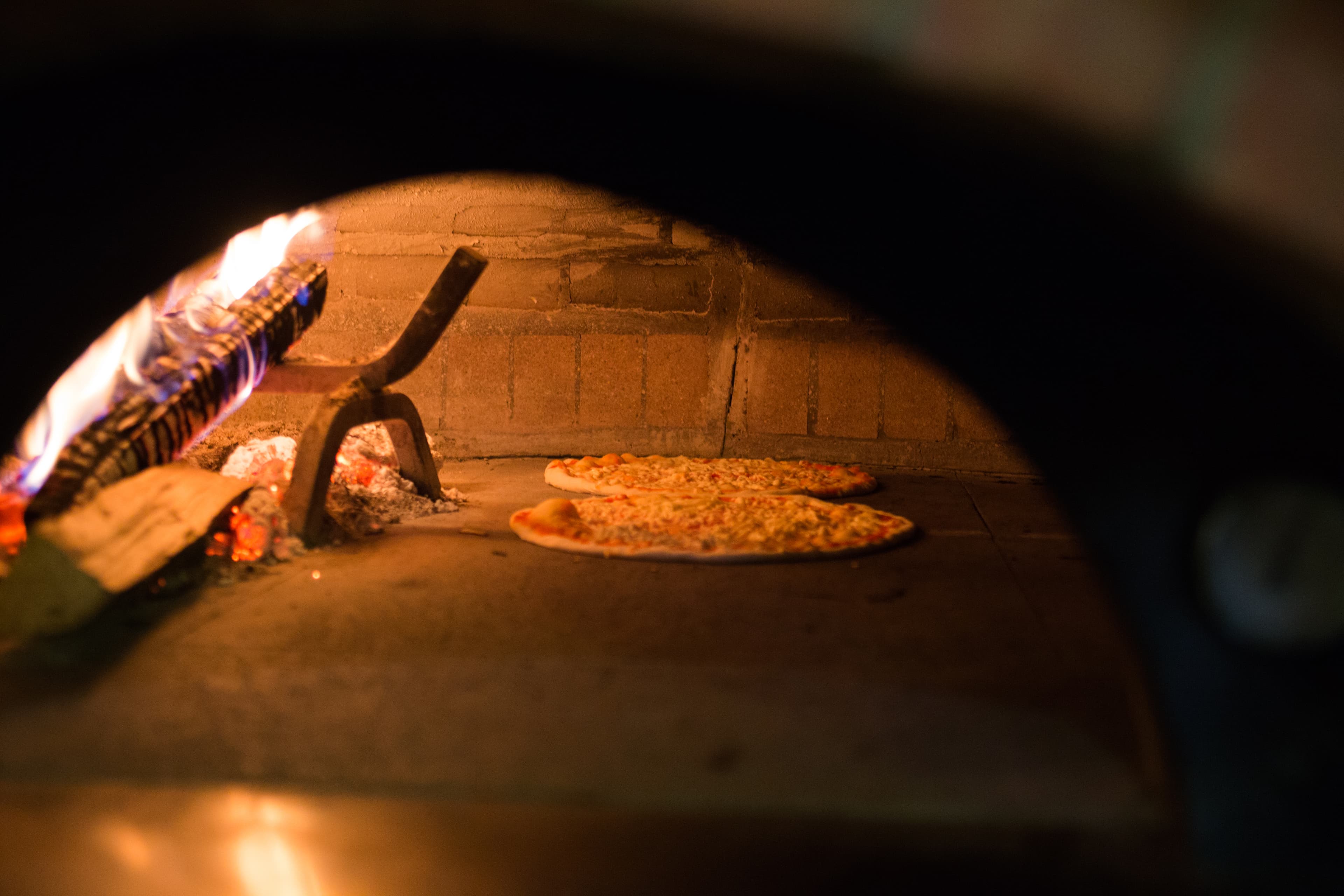
Two bricks with the same thickness can perform differently if their density differs. A high-pressure-pressed brick has uniform porosity distribution: the micro-channel network is consistent, not concentrated at weak points. This uniformity has two practical effects.
The first is thermal: uniform density ensures consistent heat accumulation throughout the brick section, without cold zones that behave differently during service. The second affects base baking: the open porosity of refractory bricks actively absorbs excess moisture released by the dough — activating the Maillard reaction that produces the crispy crust. A brick with uneven density or irregular porosity creates cold and hot spots that translate into irregular baking.
Cast mixes, however refined in formulation, produce a less controllable internal structure: micro-voids generated during pouring create low-density zones that behave differently under heat.
Hand-working: the quality control industrial production cannot replicate
Industrial series production guarantees speed and dimensional standardisation. It does not guarantee the quality of every individual piece. Surface micro-cracks, internal density variations, geometric imperfections outside tolerance: in a high-throughput automated line, these defects are detected only statistically, not on every single element.
Hand-working introduces a different level of control: every brick is individually inspected before laying. Those with visible defects or irregular dimensions are rejected. In a deck composed of dozens of bricks that must work together as a single thermal surface, the quality of each individual element adds to the quality of the whole.
Ceky's refractory bricks are hand-worked in the Lograto factory. The process is slower than industrial production. It is also why Ceky ovens have an average lifespan of over twenty years with no deck repairs needed.
In summary
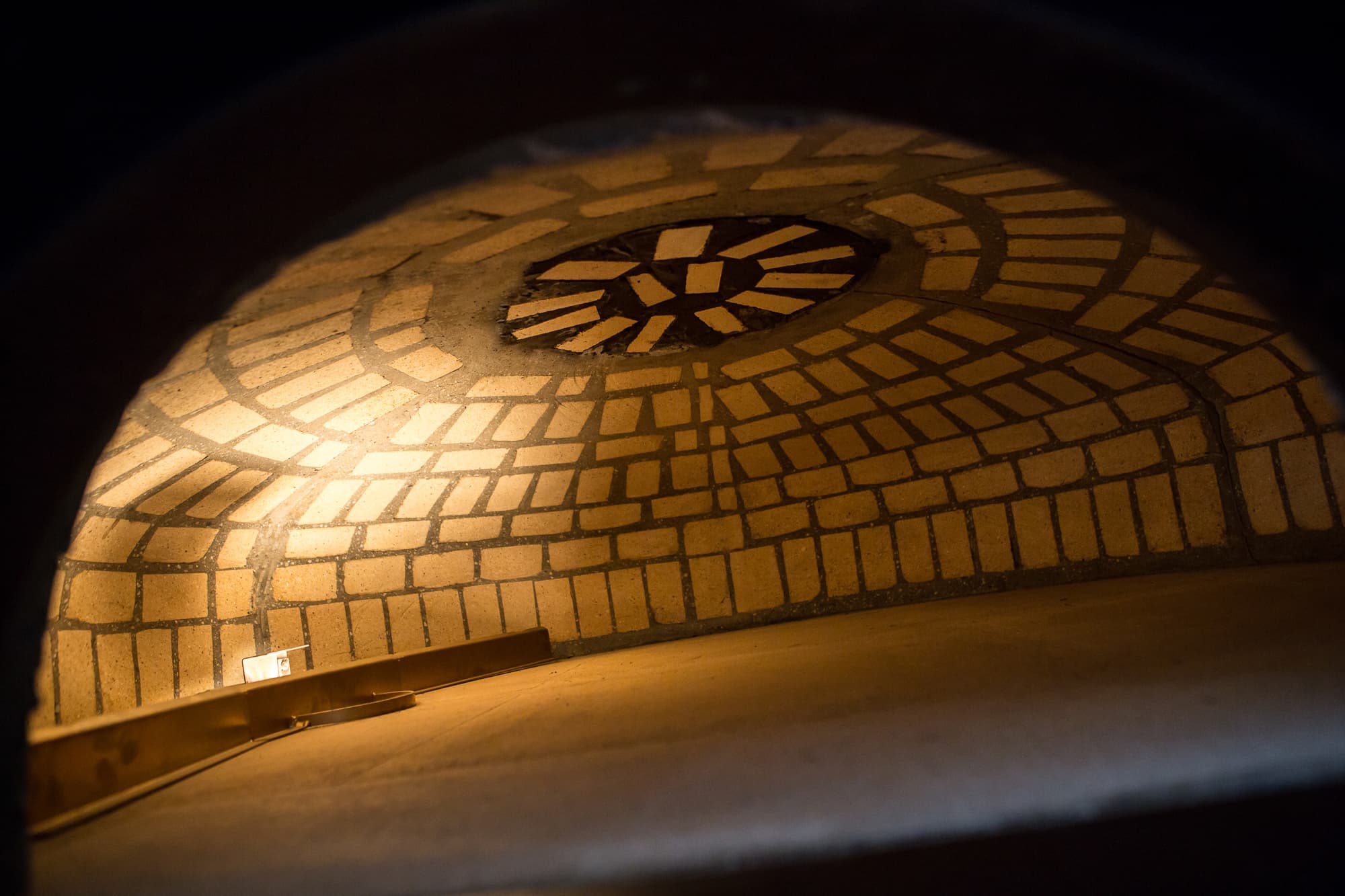
Thickness, density and hand-working are not accessory technical specifications. They determine how the oven performs at the two-hundredth service, not the first. A 60 mm refractory brick deck, hand-worked with uniform density, is the result of design choices that bring together thermal inertia, baking consistency and long-term durability. Ceky has built decks this way since 1935.