Fuel type: wood, gas, electric, mixed
The energy source is the first variable affecting price. Not because of the fuel's own cost, but because of the complexity of the systems required to manage it.
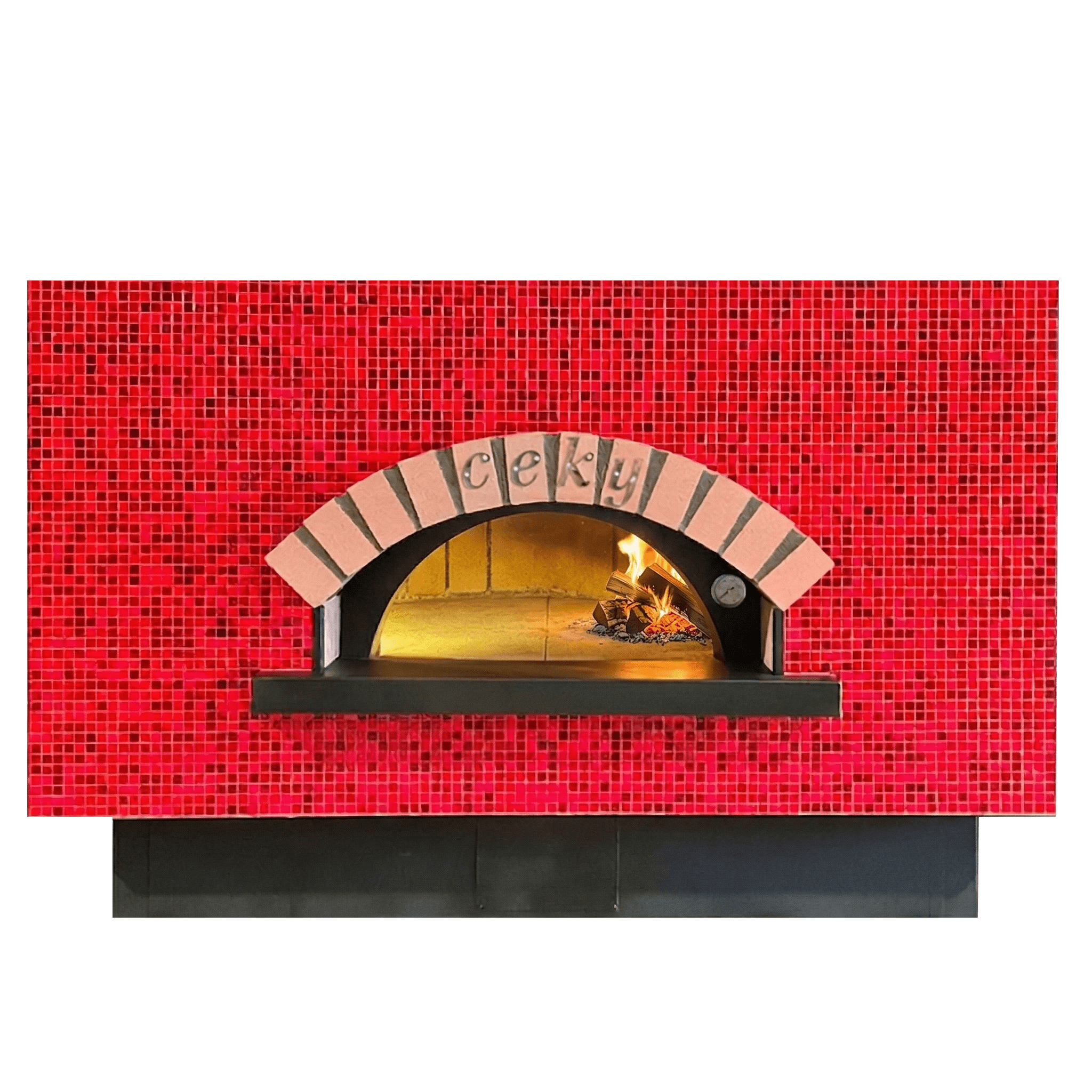
The wood-fired oven is technically the simplest: a refractory brick chamber and a firebox opening. The cost depends almost entirely on material quality and craftsmanship.
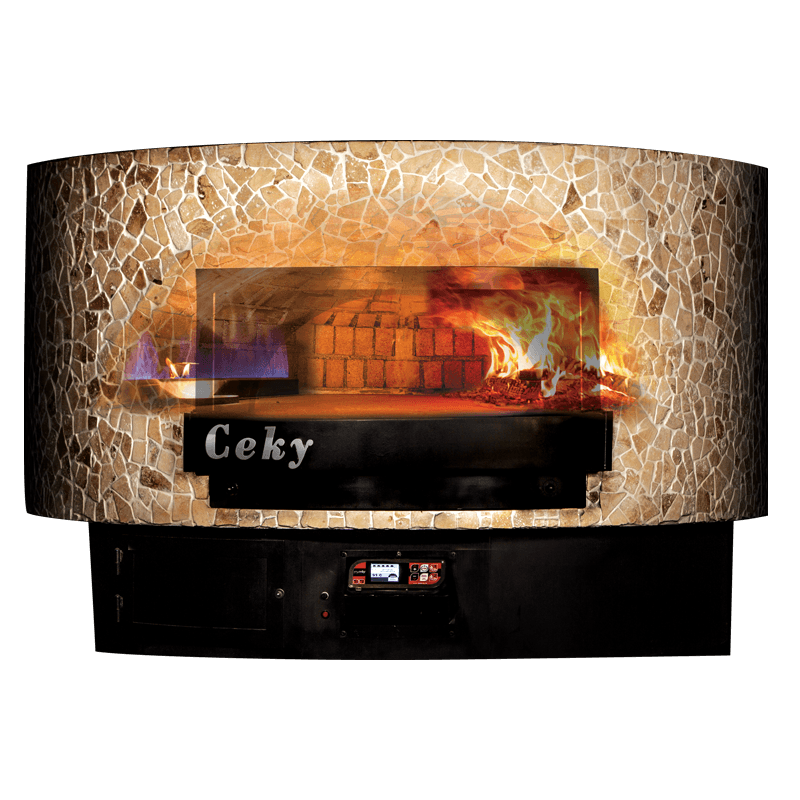
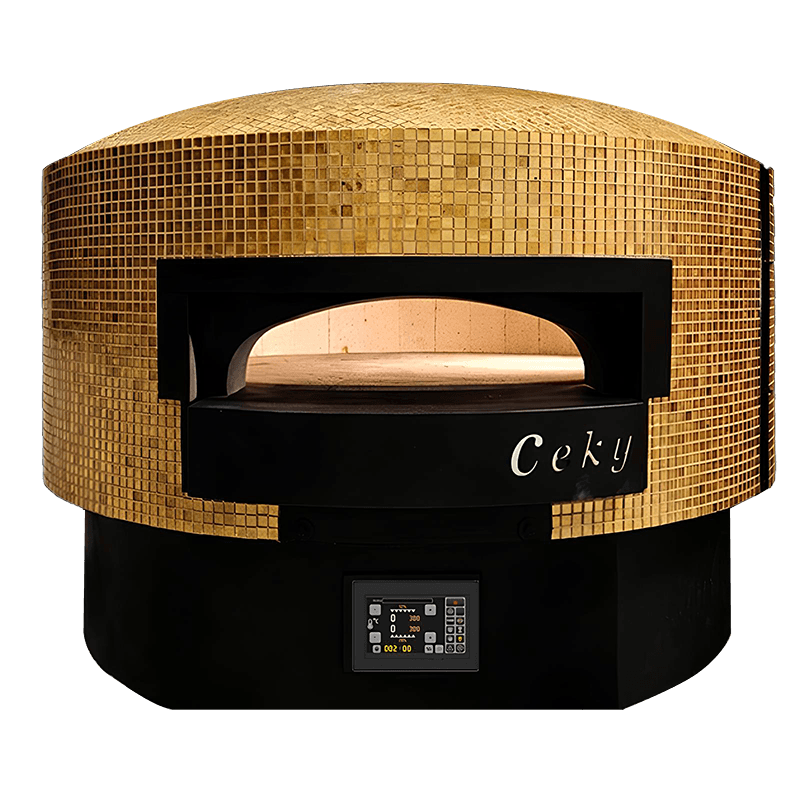
The gas oven incorporates a certified burner, safety valves, a digital thermostat and a flame regulation system. The electric oven is even more complex: independent elements for ceiling and deck, triac circuits for power modulation, multi-zone control boards. Ceky electric ovens allow independent calibration of ceiling and deck — a function that requires more sophisticated components.
The MX Line — gas and wood in a single chamber — effectively has two combustion systems: the dual technical infrastructure is reflected in its position at the top of the range.
Chamber size: from 100 to 150 cm
Professional pizza ovens are produced with internal diameters from 100 to 150 cm. Size determines three distinct cost components.
Volume of refractory material. A 150 cm oven requires significantly more bricks, insulation and outer steel than a 100 cm model. With hand-laid individual brick construction — as in every Ceky oven — each additional brick also means more skilled labour time.
Production capacity. A 100 cm oven bakes 4–6 pizzas simultaneously; a 150 cm model reaches 10–12. The cost per pizza produced falls as size increases — but the absolute oven cost rises.
Logistics and installation. A 150 cm oven weighs hundreds of kilograms more than a 100 cm model. Transport, handling and commissioning costs scale proportionally.
Static or rotating deck
The baking deck type is the variable with the greatest impact on price, all else being equal.
A static-deck oven has a fixed chamber: the pizza maker manages baking by manually turning each pizza with the peel. The chamber is simpler, the system more straightforward.
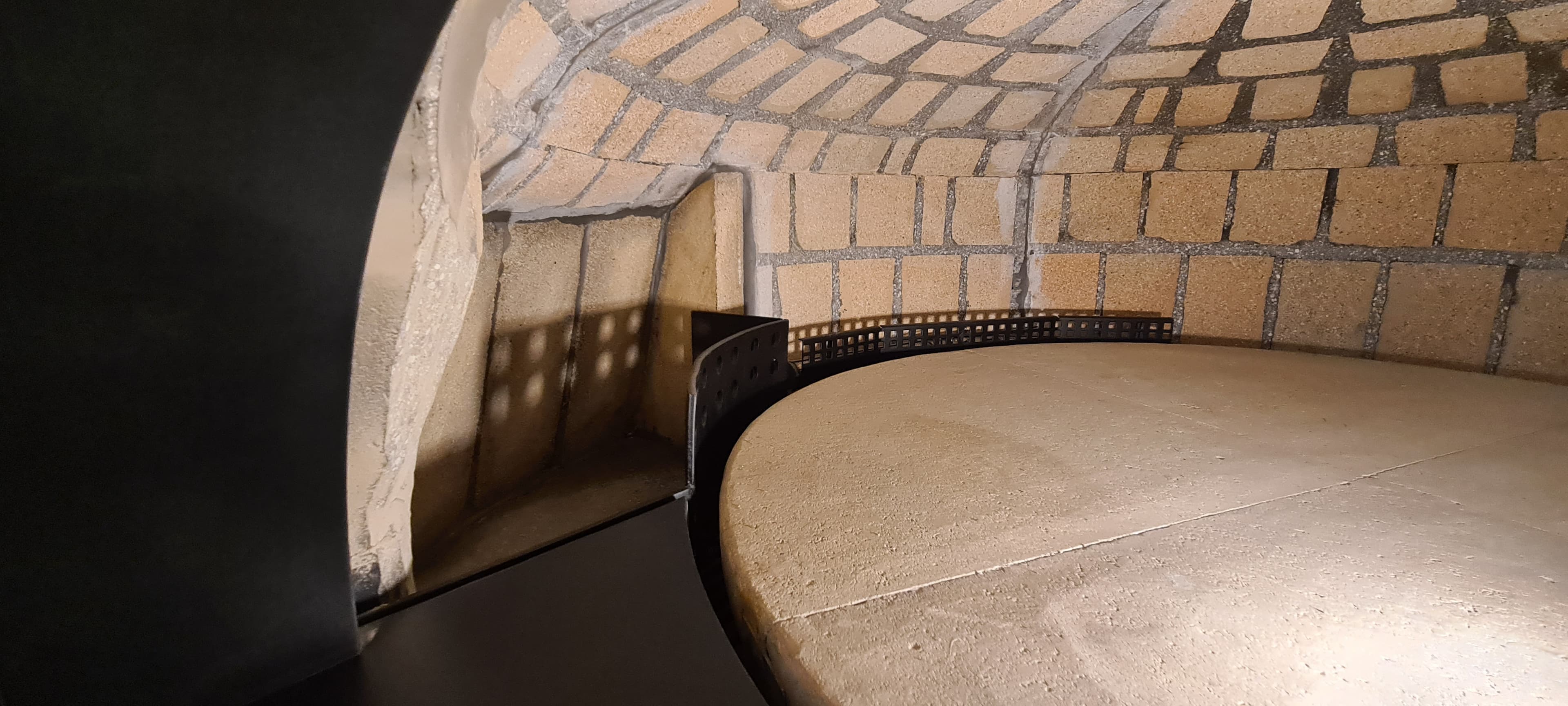
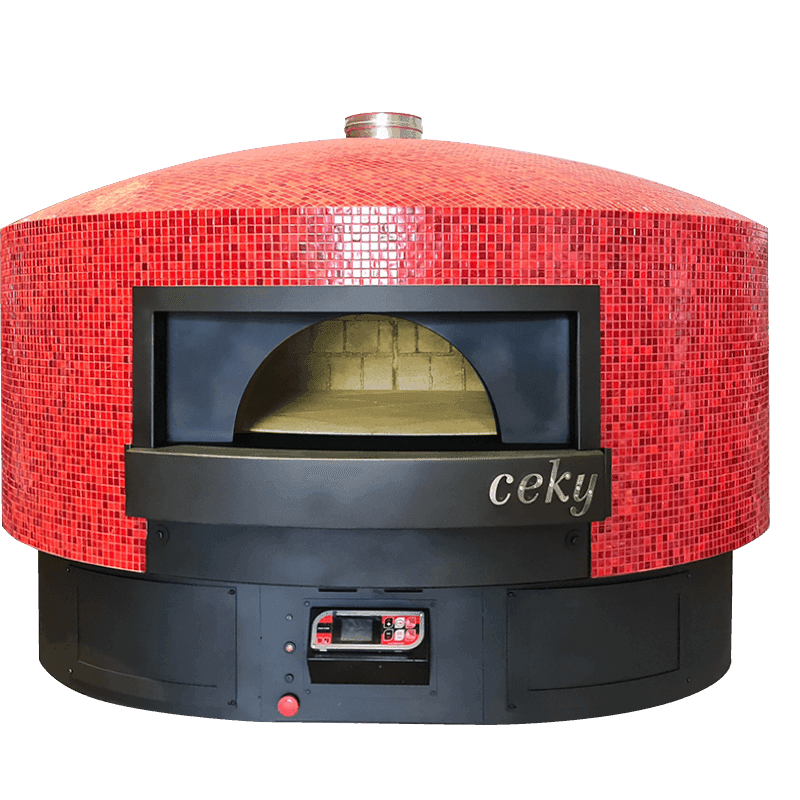
A rotating-deck oven integrates a motor, a transmission system, a central pivot with thermal seal, and a load-bearing structure capable of supporting the weight of the rotating refractory brick deck at temperatures above 400°C. The engineering complexity — and the cost — is higher.
The operational advantage is real: every pizza bakes evenly without manual intervention, service is more consistent, and manageable volume increases. For many pizzerias, the price difference between static and rotating is recovered in operational efficiency over the medium term.
Technology and controls: Wi-Fi, Industry 4.0, touchscreen
Modern professional ovens incorporate electronic systems that directly affect service quality and venue management — and these are reflected in the price.
In Ceky gas and wood rotating-deck ovens: a remote control for starting programmes and managing temperature from the peel without interrupting work; Wi-Fi connectivity for remote diagnostics and technical support; Industry 4.0 compliance, relevant for tax incentives on machinery purchases.
In electric ovens, control is even more granular: 7-inch touchscreen, customisable baking programmes recallable with a single physical key, independent zone calibration of heating elements (front, centre, back) with triac power modulation.
Every electronic component — boards, sensors, displays, communication modules — carries a production cost that adds to the final price structure.
Materials: refractory bricks vs cast mix
The refractory material is the least visible variable but the most impactful on construction cost — and on long-term performance.
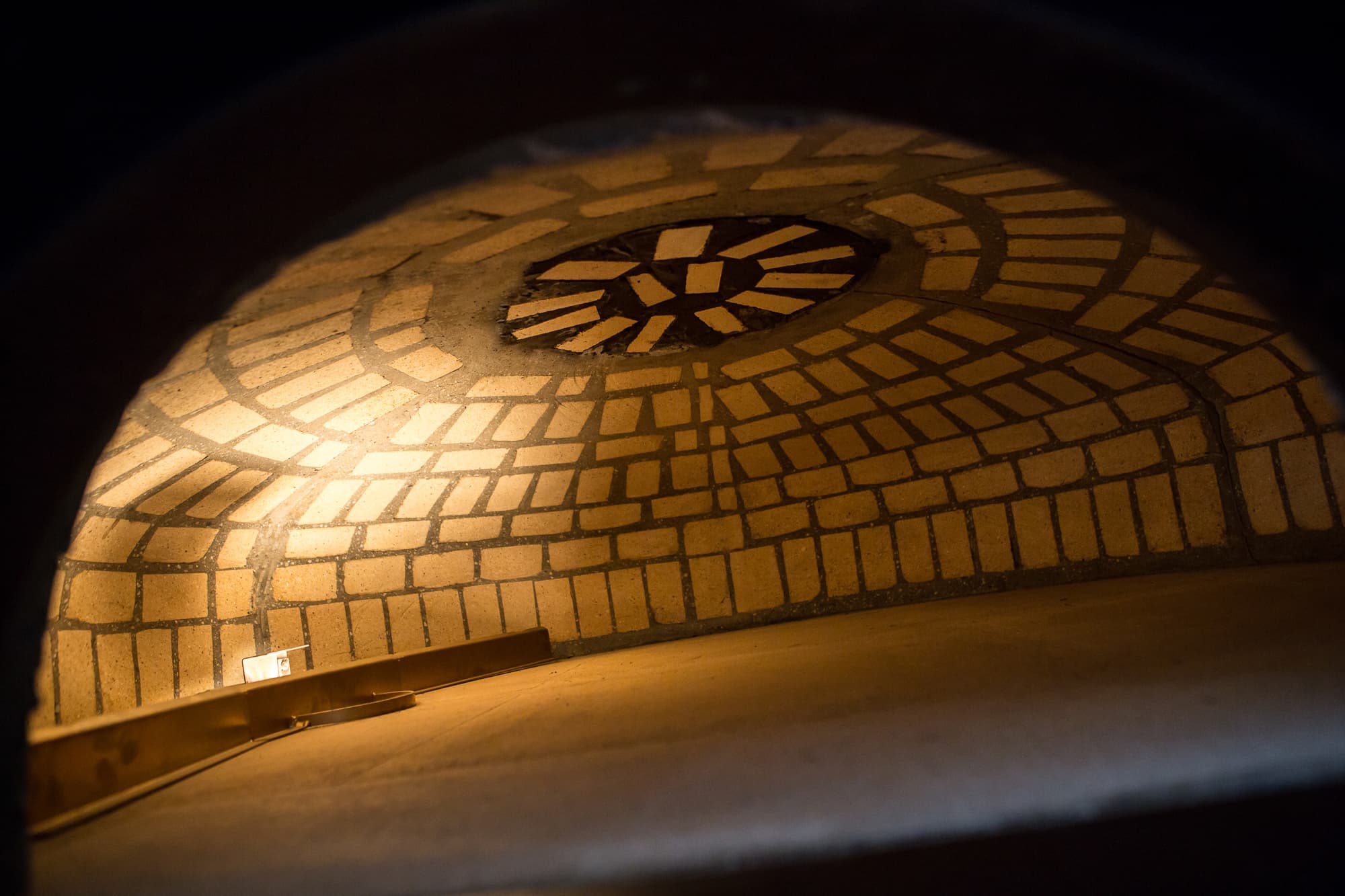
Most professional ovens on the market use cast refractory mix: an industrial process that is fast and has lower production costs. The resulting structure is uniform but has lower thermal inertia than individual bricks.
Ceky ovens are built by hand, brick by brick, using individually selected refractory bricks. Brick construction has higher thermal density, stores and returns heat more effectively, and can be repaired brick by brick after 15–20 years of service — without replacing the entire structure.
This construction requires more time and skilled labour than moulding. It is reflected in the initial price — and in the oven's operational lifespan.
In summary
The variables that determine the price of a professional oven are technical and measurable: fuel type, size, deck type, technology level, material quality. There is no "expensive" or "cheap" oven in absolute terms: there is the oven that is right for your production volume, venue type, available infrastructure and durability expectations.
A 100 cm static-deck gas oven is the right solution for a small pizzeria focused on operational simplicity. A 150 cm rotating-deck oven with Wi-Fi and digital controls is built for a high-volume venue that wants efficiency and precision. They are different machines, with different costs — and different returns on investment.
Find the right oven for your pizzeria
The Ceky configurator guides you in 4 steps: fuel, deck, collection and size.
Go to configurator