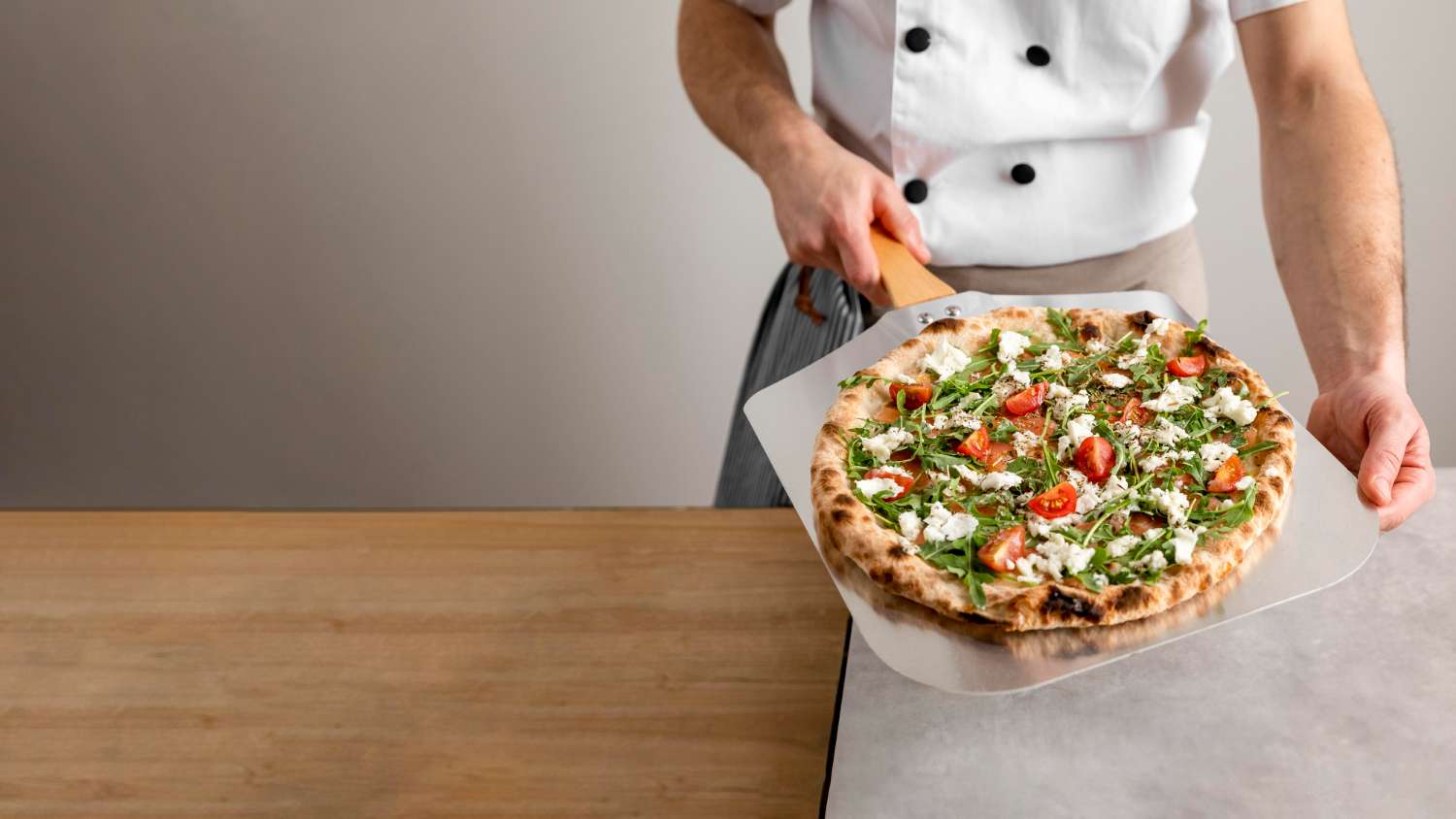
When we talk about the perfect pizza, ingredients are only part of the equation. One often underestimated but decisive element is the bake. It is precisely the time in the oven that defines the texture of the base, the crispness of the crust, and the intensity of the flavours.
The role of heat in transforming the dough
As soon as the pizza enters the oven, heat triggers a series of reactions that define its structure and flavour. Water evaporation promotes crust formation, while the Maillard reaction delivers the characteristic golden colour and inviting aroma.
In a professional pizza oven, consistent temperature ensures even baking, avoiding differences between base and surface. This allows the dough to develop the right combination of external crispness and internal softness, without altering the optimal moisture level.
Heat management for a perfect result
Precise temperature control is essential to guarantee consistent results. Professional ovens allow independent regulation of deck and ceiling heat, adapting the bake to specific needs.
The upper elements promote crust formation and crust colouring, while the lower elements affect the cooking of the base. An incorrect balance can compromise the final quality, resulting in an unevenly baked pizza.
Ideal crispness: techniques for a light, dry base
Beyond temperature, humidity management plays a key role. The refractory deck absorbs excess moisture and helps make the base crisp without hardening it.
A widely used technique among pizzaiolos is biscottatura — pre-baking the base for a few seconds before adding the toppings. This method is particularly effective for high-hydration doughs, which tend to release more water during baking.
Mistakes to avoid
Even the best professional oven requires attentive use. Some common mistakes:
- Wrong temperature: an oven that is too cold produces a rubbery pizza, while excessive heat burns the toppings
- Poor humidity management: baking too long on the deck can over-dry the base
- Skipping pre-heating: if the oven has not reached optimal temperature before loading, the crust will be underdeveloped
From technique to craft
The oven is much more than a simple tool: it is the means through which every pizzaiolo leaves their mark on the pizza. The ability to read the dough's response to temperature, to adapt the bake to different pizza styles, is what distinguishes a professional from an amateur.