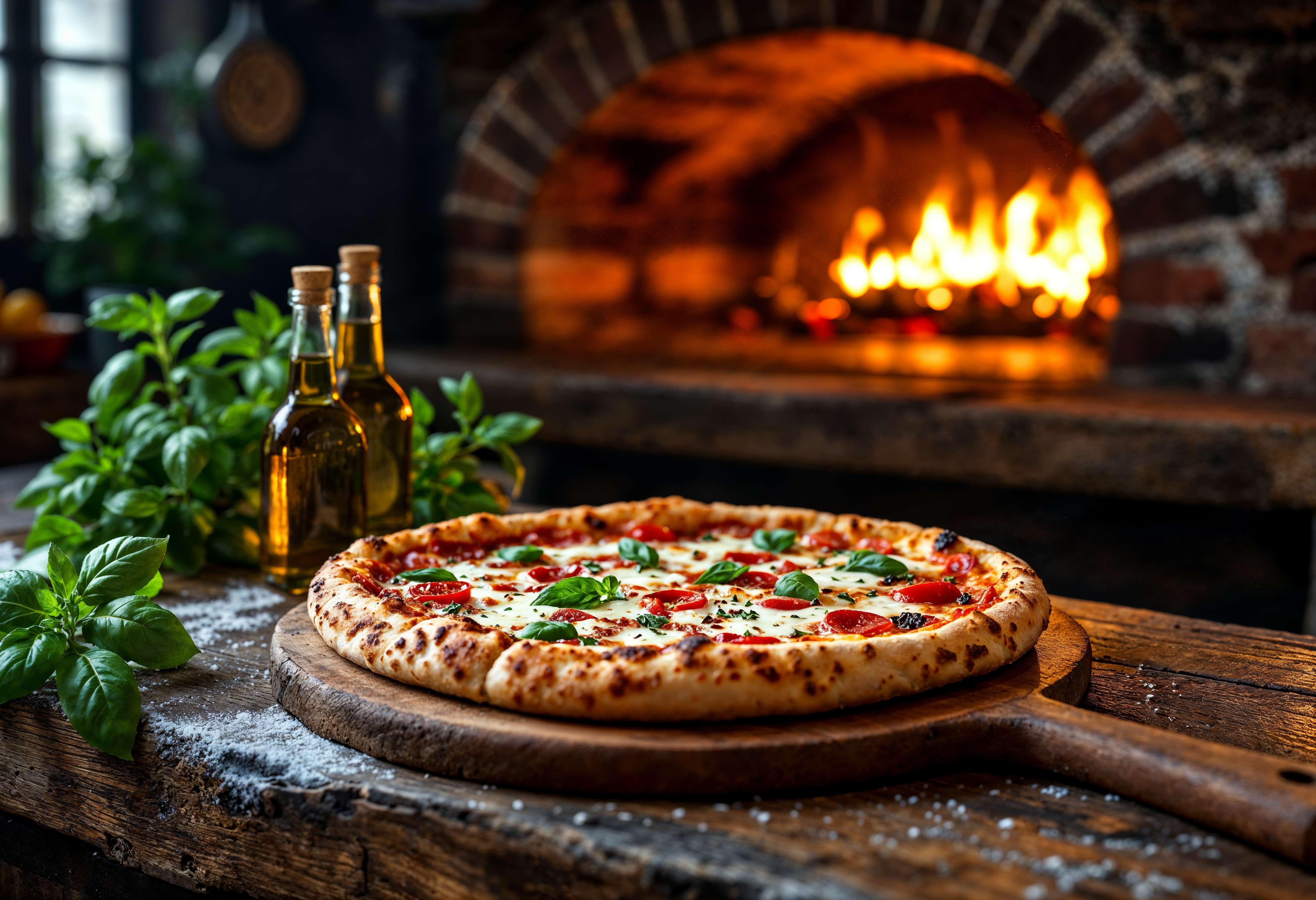
Buying a professional pizza oven is a genuine investment in productivity. The decision must take concrete operational factors into account: number of covers served, average waiting time per pizza, and the concentration of service shifts.
Equipment that does not match the business model creates inefficiencies in service times and increases operating costs. A well-considered choice, on the other hand, optimises resources and reduces energy consumption.
Static or rotating deck? The choice depends on your working pace
A static deck oven is ideal for pizzerias working with high-hydration doughs and long proving times, allowing precise manual control of the bake. It suits businesses with contained but consistent output.
A rotating deck oven is the solution for venues with a high volume of orders in a short time. The automatic movement of the deck reduces management time without compromising quality, optimising work during peak periods.
Many professionals combine more than one oven to manage different production rhythms.
The most common mistake: choosing an undersized oven
Frequently, businesses buy an oven that cannot handle peak demand, causing long thermal recovery times and reduced service speed.
Those opening a pizzeria often initially choose smaller equipment to contain costs, only to replace it later. The best solution considers future business growth, investing in production capacity that supports expansion.
An oversized oven brings unnecessary energy waste and excessive management costs. The balance between capacity and consumption is the key to a profitable investment.
Wood, gas or electric? The deciding factor is operational management
The type of fuel directly affects operational organisation:
- Wood: requires constant fire management and staff experienced in thermal regulation. The choice for those focused on traditional identity
- Gas: ensures thermal stability with less manual intervention, ideal for venues with high staff turnover
- Electric: the optimal solution for environments with emission restrictions or where flue installation is not possible
In many cases, the quality of the refractory materials and insulation determines performance more than the fuel type.
Think about your pizzeria in five years
The choice is not only about current needs but future ones too. A pizzeria that intends to increase production over time must evaluate equipment capable of handling greater workloads without the need for short-term replacement.